Top 10 Snowiest Cities in Germany
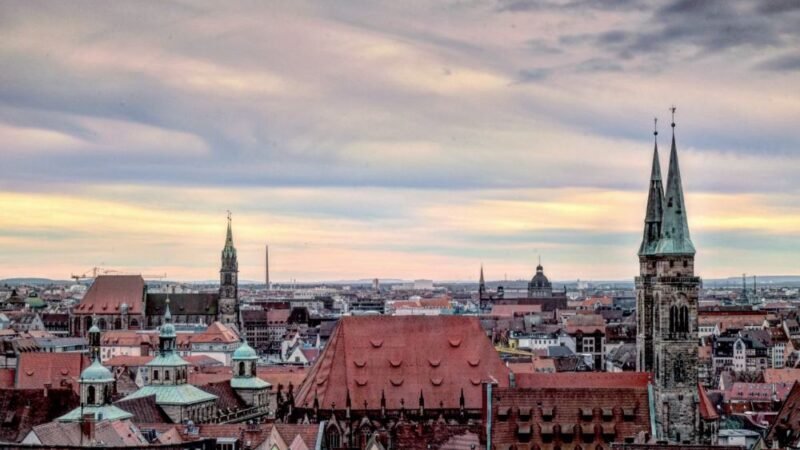
Berlin gets about 30 centimetres of snow per year. That sounds reasonable until you make the journey south.
Two hours by train from the capital, Munich sits at the edge of a completely different winter climate — colder, drier, and far snowier than anything the flat North German Plain experiences. Go another hour south toward the Austrian border and the figures shift again. Oberstdorf, Germany’s southernmost town and the top of this list, averages around 200 centimetres of annual snowfall. That’s nearly seven times Berlin’s total.
The snowiest cities in Germany are not spread across the country. They cluster in one specific region: the strip of Alpine and pre-Alpine territory in southern Bavaria and the Allgäu that runs along Germany’s border with Austria. Understanding that geography is the key to understanding this list. Germany has two winters, and only one of them is worth ranking.
All figures below come from DWD (Deutscher Wetterdienst) climate records, the German national weather service, using long-term station averages at city level.
How We Ranked These Cities
Annual snowfall accumulation in centimetres is the primary ranking metric, drawn from DWD climate station data and long-term averages. Germany’s snowfall story is almost entirely an altitude story — the correlation between elevation and annual snowfall in southern Germany is more direct than in almost any other European country, because the Alps act as a near-perfect moisture trap for cold Atlantic and continental air masses moving southward.
One clarification for the list below: some of Germany’s snowiest places are small mountain villages that don’t function as urban centres in any meaningful sense. The Zugspitze summit at 2,962 metres records over 400 centimetres of snow per year, but nobody commutes to work or sends children to school there. This list uses cities and towns with functioning school districts, transport networks, and year-round civilian populations.
The bottom of the list includes some cities in central and eastern Germany that enter through a different mechanism than the Alpine towns above them. Chemnitz and Erfurt don’t get heavy Alpine snowfall. What they get is exposure to cold continental air from the east combined with Mittelgebirge terrain that generates local orographic snowfall.
10 Snowiest Cities in Germany
1. Oberstdorf, Bavaria
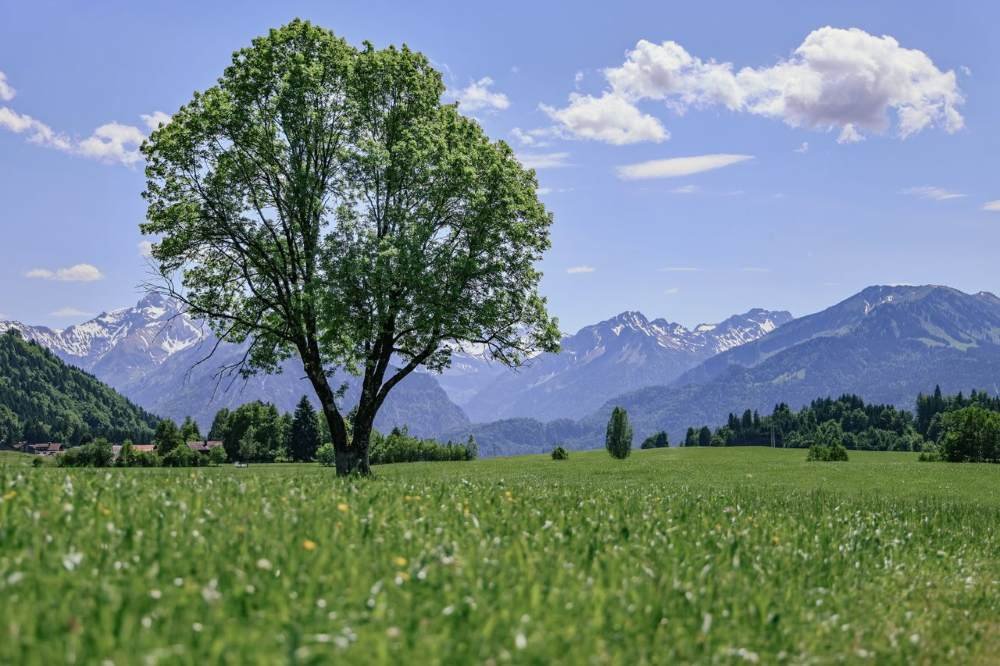
Oberstdorf sits at the southernmost point of Germany in the Allgäu Alps, at approximately 815 metres elevation, and it averages around 200 centimetres of snow per year. That total makes it Germany’s snowiest urban settlement, and the gap between Oberstdorf and the next city on this list reflects just how well-positioned it is for catching Alpine moisture from multiple directions.
The Allgäu Alps around Oberstdorf create a natural bowl that collects precipitation from westerly Atlantic systems, southerly Mediterranean moisture flows, and northerly Arctic air masses simultaneously. When a significant winter low-pressure system moves across Central Europe, Oberstdorf doesn’t just catch the edge of it. It sits in the convergence zone where different air masses meet, compress, and unload. Single events of 40 to 60 centimetres are documented most winters, on top of a base layer that never fully clears between December and March.
The town has a permanent population of around 9,500 people, which makes it the smallest settlement on this list. But it has a functional school district, road network, and service infrastructure that deal with serious winter conditions every year without treating them as emergencies. School closures in Oberstdorf happen, but they’re driven by specific hazards — avalanche risk on approach roads, extreme cold, or visibility conditions — rather than snowfall totals that the town’s infrastructure handles routinely.
Oberstdorf is also one of Germany’s best-known winter sports destinations, hosting events in Nordic skiing, ski jumping, and alpine skiing annually. The same conditions that make it an elite sports venue make it the undisputed leader of this list.
Snow season: November through April
Peak months: January through February
Closure risk: Very High
2. Garmisch-Partenkirchen, Bavaria
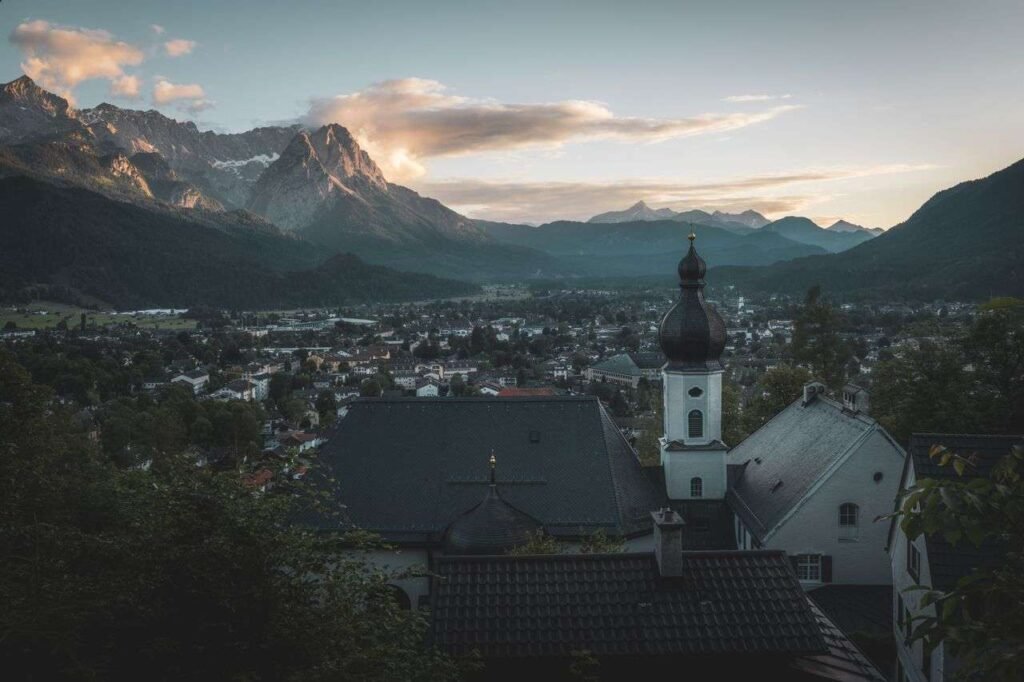
Garmisch-Partenkirchen hosted the 1936 Winter Olympics, and 90 years on, it remains one of the most recognisable winter sports locations in Germany. The town sits at around 720 metres elevation at the foot of the Zugspitze, Germany’s highest mountain, and averages approximately 175 centimetres of annual snowfall, second only to Oberstdorf on this list.
The Zugspitze directly above the town receives some of the heaviest snowfall in all of Germany. At 2,962 metres, the summit records over 400 centimetres annually, but those figures belong to a different climate category from the town on the valley floor. What Garmisch-Partenkirchen gets is the orographic enhancement effect: cold air that rises over the Zugspitze massif drops its moisture as it climbs, and the lower slopes where the town sits catch the leading edge of that precipitation process.
One of the most recognisable features of Garmisch-Partenkirchen’s winter is the Föhn, a warm, dry downslope wind that periodically pushes across the Alps from the south and raises temperatures dramatically within hours. A Föhn event in February can turn a snow-covered landscape into soft, thawing conditions in a morning. Locals have a complicated relationship with it. The Föhn is associated with headaches and mood changes in regional folk medicine, and its appearance mid-winter disrupts the otherwise reliable accumulation.
Despite the Föhn, Garmisch-Partenkirchen’s snowfall total is one of the most reliable in Germany. The town’s infrastructure is built around it, its economy depends on it, and its residents understand it with the matter-of-fact familiarity that comes from generations of living in an Alpine town.
Snow season: November through April
Peak months: January through February
Closure risk: Very High
3. Mittenwald, Bavaria
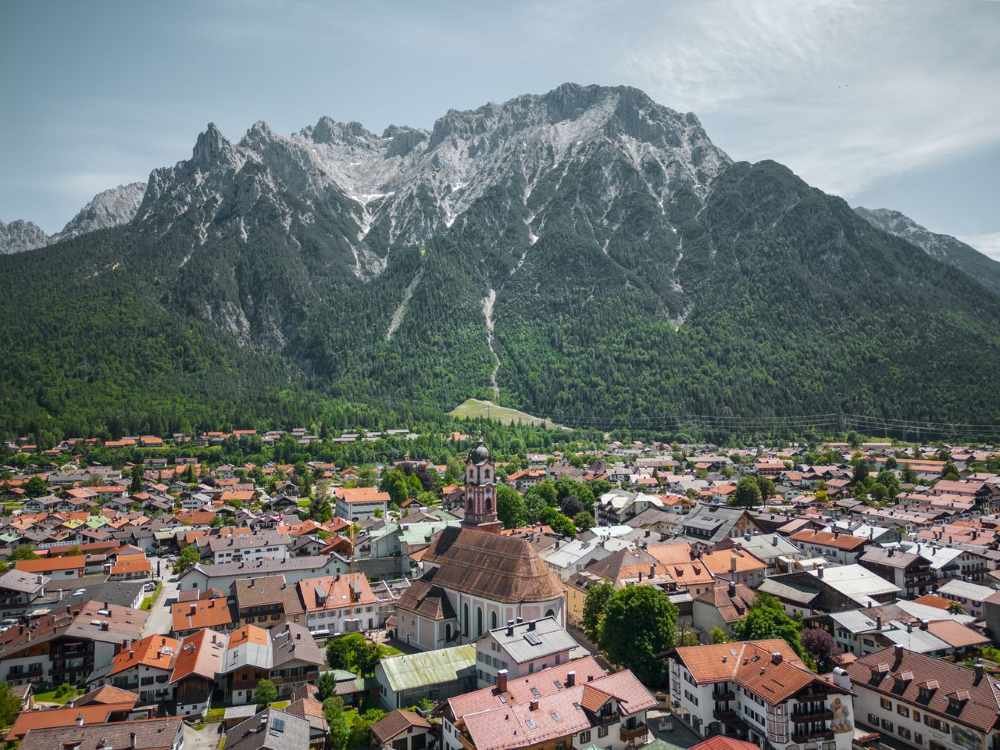
Mittenwald is a smaller Alpine town at around 920 metres elevation on Germany’s border with Austria, in the valley between the Karwendel and Wetterstein mountain ranges. Annual snowfall averages approximately 160 centimetres. The town is better known internationally for its violin-making tradition than for its weather, but from a winter climate perspective, its position in a deep Alpine valley surrounded by peaks over 2,000 metres makes it one of Germany’s most consistently snow-covered settlements.
The Karwendel range to the north and east of Mittenwald creates a valley floor that holds cold air exceptionally well. Temperature inversions are common in winter, where the valley stays below freezing for extended periods while higher elevations experience relatively milder conditions. For snowfall accumulation, this means that precipitation falling during cold synoptic patterns stays where it lands and compacts rather than melting between events.
Mittenwald’s schools and local services operate on the assumption that significant snow cover is a constant from late November through late March. The town’s roads are steep in places, and the approach routes from Innsbruck and Munich through the mountain passes are among the most reliably challenging winter driving routes in southern Germany.
What Mittenwald illustrates well is a pattern that appears throughout this list: Germany’s snowiest places are almost universally located where altitude and valley position combine to trap cold air and intercept moisture. It’s a simple mechanism, but it produces dramatically different winter conditions from what most of Germany experiences.
Snow season: November through April
Peak months: January through February
Closure risk: Very High
4. Berchtesgaden, Bavaria
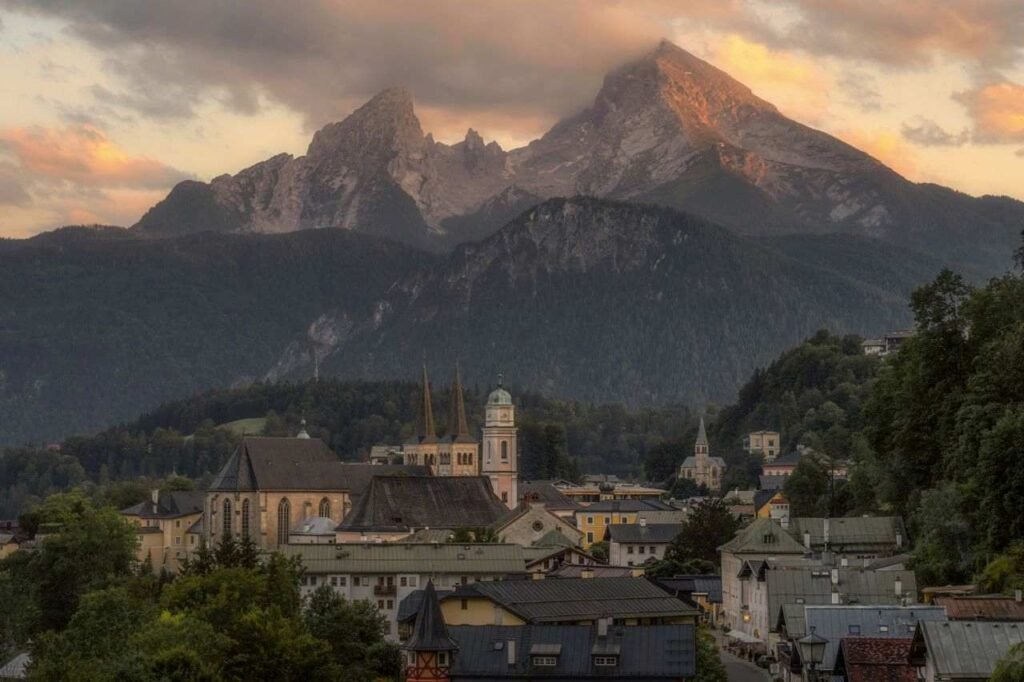
Berchtesgaden sits in one of the most topographically dramatic settings of any German town: a valley in the far southeastern corner of Bavaria, surrounded by the Berchtesgaden Alps, with the Watzmann massif rising directly behind the town centre to 2,713 metres. Annual snowfall averages approximately 145 centimetres. The surrounding national park and the Königssee lake below preserve a winter landscape that sees serious snowfall every year without exception.
Cold air drains from the surrounding peaks into the Berchtesgaden valley floor overnight during clear winter weather, creating temperature patterns that can sit 5 to 8 degrees colder than Munich, 150 kilometres to the northwest, during the same synoptic weather pattern. That cold pool effect means Berchtesgaden holds its snow cover longer than the DWD accumulation figures alone suggest, because melt events that partially clear Munich’s streets don’t reach the valley floor temperatures necessary to do the same here.
The town is known internationally partly for its wartime history and partly for Königssee, one of Germany’s deepest and coldest lakes. In severe winters, Königssee partially freezes near its shores — an event rare enough to attract regional attention when it occurs, given that the lake’s depth and input from Alpine streams normally keeps it liquid year-round.
Berchtesgaden’s school closure triggers include avalanche warnings on surrounding slopes and the local road approach from Bad Reichenhall, which can become genuinely hazardous in heavy snowfall before clearing crews have time to respond.
Snow season: November through April
Peak months: January through February
Closure risk: Very High
5. Kempten im Allgäu, Bavaria
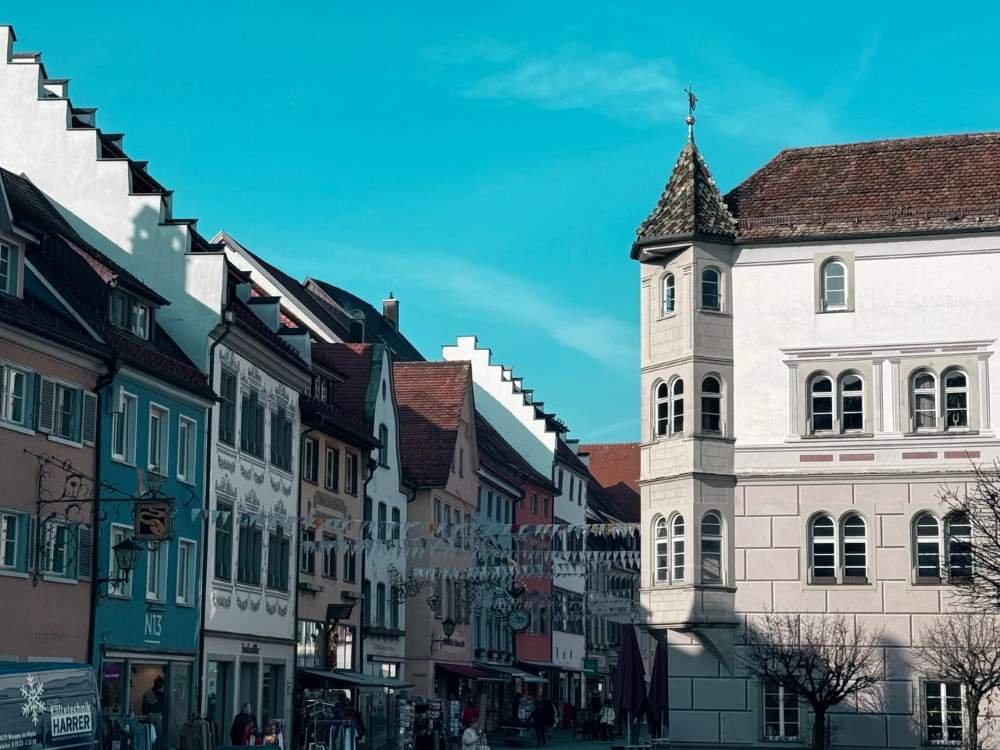
Kempten is the regional capital of the Allgäu, one of Germany’s oldest cities by documented history, and with around 70,000 residents it’s the largest city on this list by a substantial margin until you reach Munich at number seven. Annual snowfall averages approximately 110 centimetres, driven by its position in the Allgäu foothills at around 670 metres elevation, where the influence of the nearby Alps combines with Continental European cold air patterns to produce consistent winter accumulation.
The Allgäu as a region has a distinct winter character compared to the higher Alpine towns above it on this list. Kempten gets heavy snowfall but also experiences more frequent midwinter thaw events than Oberstdorf or Garmisch, because its lower elevation and slightly less sheltered position exposes it to occasional Atlantic warming. In practical terms, this means the snow comes and partly goes in cycles rather than accumulating continuously from December through March.
Kempten’s road network and school infrastructure reflect a city that takes winter seriously. The city sits on hills above the Iller river, and its residential streets require active snow management during significant events. January closures for schools are part of the expected annual calendar rather than a surprise.
One of the pleasures of the Allgäu in winter, from a purely meteorological perspective, is watching the contrast between the fog layer that sits over the Bavarian plateau to the north and the clear, snowy landscape above it. Kempten often sits right at the inversion boundary, sometimes foggy and grey at street level while the hills above are brilliantly clear and snow-covered.
Snow season: November through March
Peak months: January through February
Closure risk: High
6. Rosenheim, Bavaria
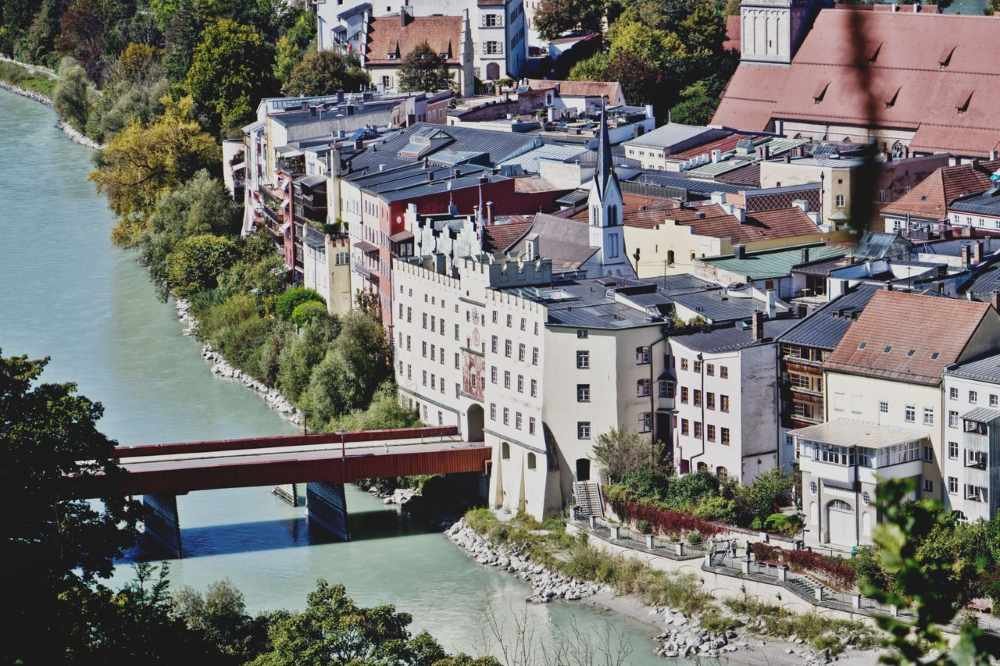
Rosenheim sits about 60 kilometres southeast of Munich in the Inn valley, at around 450 metres elevation, and serves as a gateway between the Bavarian plateau and the Alpine foothills. Annual snowfall averages approximately 85 centimetres. The city doesn’t have the dramatic Alpine backdrop of the towns above it on this list, but its position south of Munich means it sits consistently inside the snowier band of Bavarian pre-Alpine weather.
The Inn valley funnels cold air from the Alps toward Rosenheim during northerly and northeasterly wind patterns, and the city’s position between the Chiemgau Alps to the southeast and the Mangfall Alps to the southwest means snowfall events can come from multiple directions depending on storm track. January and February are the peak months, but November and December bring early accumulation that builds the base for the season.
Rosenheim’s significance in the context of this list is what it represents: the transition point between the Alpine snowfall regime and the plateau weather that Munich experiences. The difference between Rosenheim at 85 centimetres and Munich at 60 centimetres reflects approximately 200 metres of elevation gain and 60 kilometres of proximity to the Alps. It’s a meaningful gap for a relatively short distance.
The city is large enough, with around 65,000 residents, to have full urban infrastructure for winter, but its snow management resources deal with heavier loading than Munich’s equivalent systems. School closures in Rosenheim follow similar thresholds to the larger Alpine-adjacent cities to its south.
Snow season: November through March
Peak months: January through February
Closure risk: High
7. Munich, Bavaria
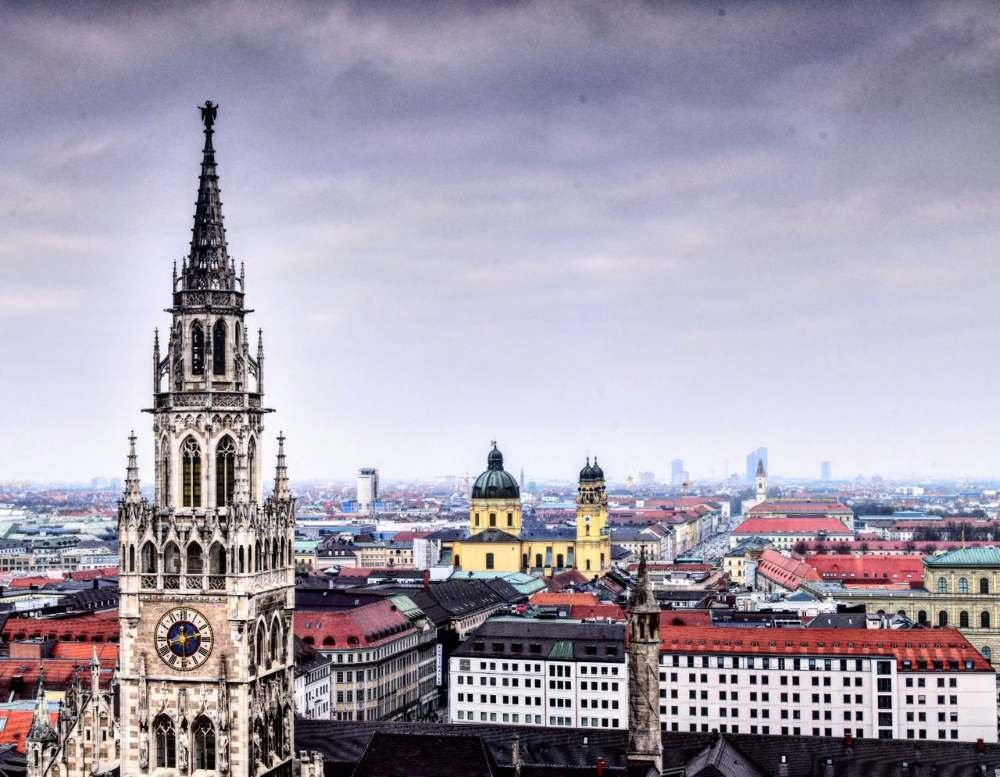
Munich is Germany’s third-largest city, with 1.5 million residents, and it averages around 60 centimetres of annual snowfall. That makes it Germany’s snowiest major urban centre, and for a city of its scale, 60 centimetres is a figure that demands serious winter infrastructure planning. The Munich underground, the S-Bahn, bus networks, and road clearing operations run through the entire winter season on the assumption that snow will arrive repeatedly and need to be managed without interrupting daily life significantly.
Munich sits at around 520 metres elevation on the northern edge of the Bavarian plateau, and its position gives it a genuinely alpine winter character compared to German cities further north. Frankfurt, roughly 300 kilometres northwest, averages about 25 centimetres annually. Berlin, as noted at the start of this article, gets about 30 centimetres. Munich’s 60 centimetres reflects both its southern latitude and its elevation on a plateau that tilts upward toward the Alps.
The Föhn is as relevant to Munich as it is to Garmisch-Partenkirchen. Warm Alpine air pushing north over the mountains can raise Munich’s temperature dramatically in winter, bringing a bizarre midwinter warmth that melts snow cover within hours. On those days, Munich residents can see the Alps with unusual clarity due to the dry, transparent Föhn air — the mountains appear closer than they should, which is a well-known local phenomenon. The trade-off is that the city’s snow cover becomes unpredictable in ways that the Alpine towns further south don’t experience.
Munich school closure decisions reflect a city that’s well-prepared but not immune. A single overnight event of 15 to 20 centimetres combined with freezing temperatures and uncleared roads pushes closure decisions. The city experiences two or three such events in a typical winter.
Snow season: November through March
Peak months: January through February
Closure risk: Moderate-High
8. Augsburg, Bavaria
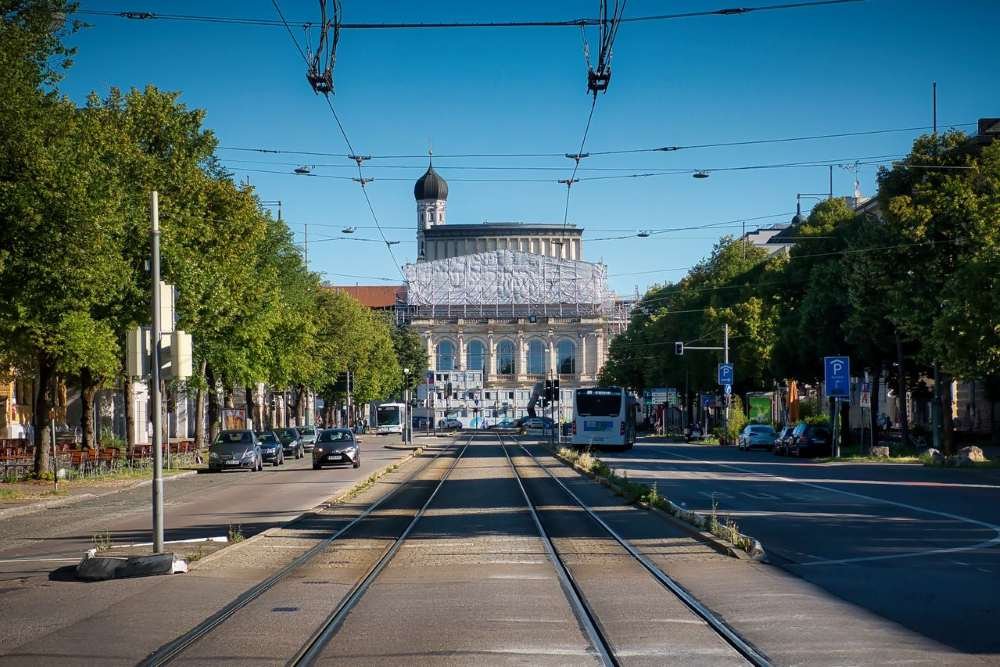
Augsburg is one of Germany’s oldest cities — Roman in origin, founded around 15 BC — and it sits about 80 kilometres west of Munich at slightly lower elevation, around 490 metres. Annual snowfall averages approximately 58 centimetres, marginally behind Munich in the ranking but close enough that the two cities often experience the same weather events with similar accumulation totals.
What distinguishes Augsburg’s winter weather from Munich’s is its position slightly further from the Alps and on the Swabian-Bavarian plateau west of the Lech river. Cold air from the northeast, which drives winter snowfall across much of southern Germany, hits Augsburg from a direction that Munich’s Bavarian plateau absorbs first. This means Augsburg sometimes sits in Munich’s meteorological shadow for northeasterly events, while catching the full leading edge of westerly systems that track across the Swabian plateau from the direction of the Black Forest.
Augsburg’s medieval centre, with its old Roman grid overlaid by centuries of development, handles snow in the way that densely built historic city centres always do: surface area matters, narrow streets trap cold air and shade icy patches from sunlight, and the combination of stone and cobblestone paving refreezes melt water faster than asphalt. The city’s public space is cleaned regularly in winter, but ice lingers in older residential areas.
The city has a large student population and an industrial economy, both of which keep daily activity levels high through winter regardless of conditions. This creates demand for reliable school and transport operations that the city’s winter management infrastructure tries to meet.
Snow season: November through March
Peak months: January through February
Closure risk: Moderate-High
9. Chemnitz, Saxony
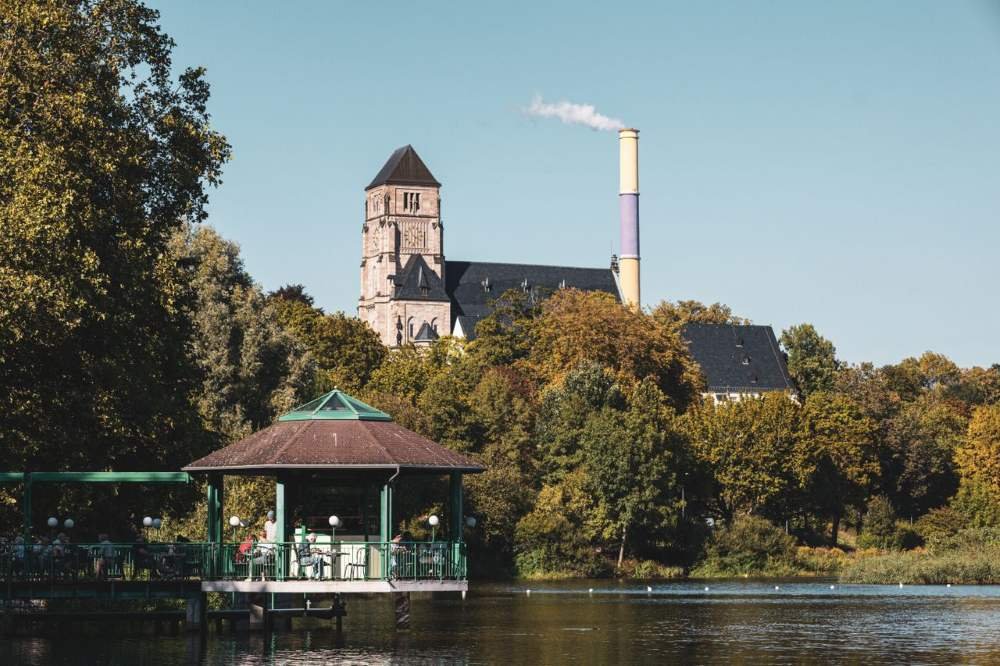
Chemnitz is the first eastern German city on this list, and it arrives here through a different mechanism than the Bavarian cities above it. Chemnitz sits at around 310 metres in western Saxony, at the northern edge of the Erzgebirge (Ore Mountains), and its proximity to that upland range gives it access to orographic snowfall that flat eastern German cities simply don’t experience. Annual snowfall averages approximately 50 centimetres.
The Erzgebirge range along Germany’s border with the Czech Republic is one of the snowiest mountain ranges in Central Europe. The highest peaks receive over 300 centimetres of snow annually in cold winters, and Chemnitz, sitting at the range’s northern foothills, catches a meaningful share of the snowfall that forms as cold continental air is forced to rise over the mountains. The mechanism is different from Alpine orographic lift but the effect — concentrated, reliable snowfall in a geographically specific zone — is comparable.
Cold continental air from the east is Chemnitz’s other winter driver. When Siberian high-pressure systems push westward across Poland and into Germany — which happens in most winters for at least one or two significant cold spells — Chemnitz sits well inside the affected zone. These events combine continental cold with whatever moisture is available from the Baltic and North Sea to the north, producing snowfall events that can be heavier and more persistent than the annual average suggests.
Chemnitz’s industrial history means its built environment was designed for utility rather than alpine weather management. Cold spells in eastern Germany attract less national attention than Bavarian Alpine snowfall, but local residents dealing with icy tram routes and uncleared pavements in -15°C temperatures know the conditions are serious.
Snow season: November through March
Peak months: January through February
Closure risk: Moderate
10. Erfurt, Thuringia
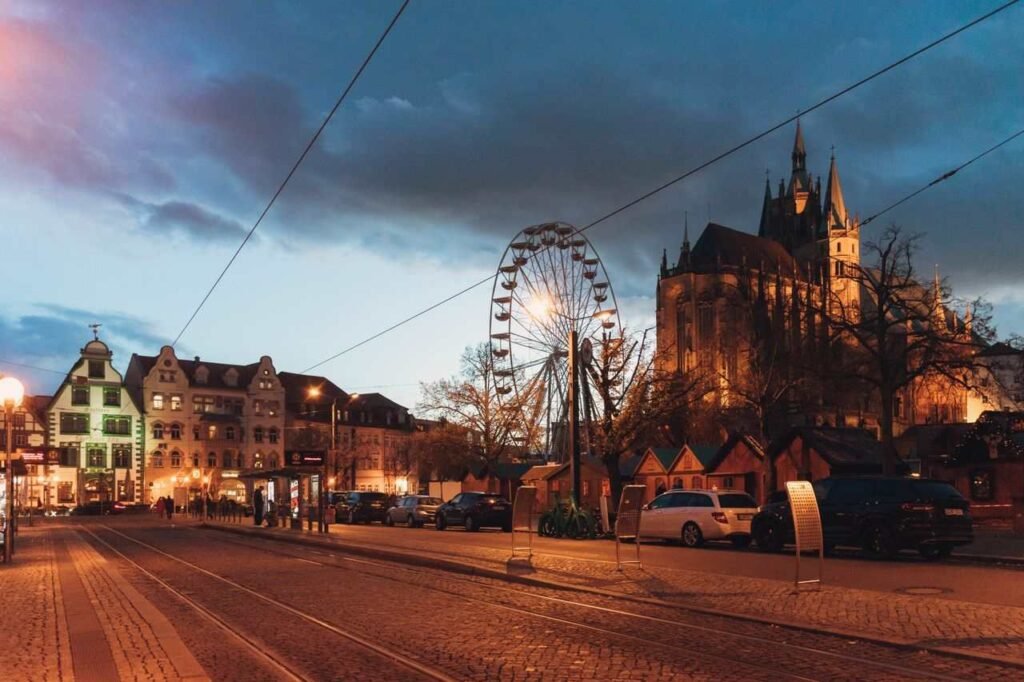
Erfurt closes the list as the capital of Thuringia, positioned in central Germany at around 200 metres elevation in the Thuringian Basin. Annual snowfall averages approximately 45 centimetres, and its inclusion reflects a combination of central German latitude, continental cold air exposure, and the modest orographic enhancement it receives from the Thuringian Forest and Harz mountains to its west and northwest.
Thuringia sits in a region of Germany that experiences genuine winter cold without the Alpine snowfall mechanisms of Bavaria. Erfurt’s winter is driven by continental air masses — when they arrive, temperatures drop quickly and stay low, and whatever precipitation falls converts to snow across a wide zone. The Thuringian Basin can sit in a cold pool during high-pressure winter anticyclones, with temperatures well below those of the surrounding higher terrain.
The Thuringian Forest to the southwest of Erfurt, reaching peaks of around 980 metres, is one of Germany’s more reliably snowy upland areas in central latitudes. Its snowfall doesn’t directly affect Erfurt’s totals — the city is in the basin, not on the mountains — but the range marks the western boundary of the cold continental zone that gives Erfurt its winter character.
Erfurt is a historically rich city, home to one of Germany’s oldest universities and a beautifully preserved medieval centre. The Krämerbrücke, a medieval bridge lined with inhabited houses, photographs magnificently in winter snow — which happens reliably enough that local tourism capitalises on it as a seasonal draw.
Snow season: November through March
Peak months: January through February
Closure risk: Moderate
Germany’s Snowiest Cities — Comparison Table
| # | City | Annual Avg | Peak | Season | Risk |
|---|---|---|---|---|---|
| 1 | Oberstdorf | ~200 cm / 79″ | Jan–Feb | Nov–Apr | Very High |
| 2 | Garmisch-Partenkirchen | ~175 cm / 69″ | Jan–Feb | Nov–Apr | Very High |
| 3 | Mittenwald | ~160 cm / 63″ | Jan–Feb | Nov–Apr | Very High |
| 4 | Berchtesgaden | ~145 cm / 57″ | Jan–Feb | Nov–Apr | Very High |
| 5 | Kempten im Allgäu | ~110 cm / 43″ | Jan–Feb | Nov–Mar | High |
| 6 | Rosenheim | ~85 cm / 33″ | Jan–Feb | Nov–Mar | High |
| 7 | Munich | ~60 cm / 24″ | Jan–Feb | Nov–Mar | Mod-High |
| 8 | Augsburg | ~58 cm / 23″ | Jan–Feb | Nov–Mar | Mod-High |
| 9 | Chemnitz | ~50 cm / 20″ | Jan–Feb | Nov–Mar | Moderate |
| 10 | Erfurt | ~45 cm / 18″ | Jan–Feb | Nov–Mar | Moderate |
How Germany’s Snowfall Compares Across Europe
Germany’s Alpine cities sit comfortably in the middle of a European snowfall ranking. Oberstdorf at 200 centimetres would place it third or fourth on a European cities list, behind Murmansk and roughly in line with Innsbruck and Tromsø. The country’s pre-Alpine cities — Munich, Augsburg, Rosenheim — fall into the middle tier of European snowfall, comparable to Stockholm or Oslo.
The contrast with England is worth noting directly. England’s snowiest cities top out around 50 centimetres for Sheffield, which is roughly equivalent to Munich, Germany’s seventh snowiest city. Germany’s Alpine towns operate in a completely different winter category from England’s northern urban areas, despite both countries being considered “northern European” in a broad sense.
If you’re tracking winter storm probability for a US or Canadian school closure, the snow day predictor runs your ZIP code or postal code against National Weather Service data and returns a real-time probability based on local conditions.
FAQ’s
Oberstdorf, in Bavaria’s Allgäu Alps, is the snowiest German town with approximately 200 centimetres of annual snowfall. For larger cities, Munich averages around 60 centimetres annually, making it Germany’s snowiest major urban centre. The gap between Alpine towns in the south and cities in central or northern Germany is significant.
Oberstdorf receives the most snowfall among German settlements with a functioning civilian population, averaging around 200 centimetres per year. The Zugspitze summit above Garmisch-Partenkirchen records higher totals, but the summit weather station data represents high-altitude alpine conditions rather than an urban environment.
Yes, but modestly. Berlin averages around 30 centimetres of annual snowfall, spread across approximately 20 to 25 days per winter. The city’s flat, northern position on the North German Plain means it lacks the Alpine orographic enhancement that drives snowfall in Bavaria. Cold continental air from the east does bring significant snow events to Berlin periodically — the city can receive 10 to 15 centimetres in a single event — but the annual total is far below what southern German cities experience.
Two reasons: altitude and proximity to the Alps. Bavaria’s southern border runs along the northern edge of the Alps, and the mountains act as a moisture trap for cold air masses moving in from the west, north, and east. As air rises over the Alpine terrain, it cools and deposits precipitation as snow. Southern Bavarian cities and towns also sit at higher base elevations than northern German cities, which means a larger proportion of winter precipitation falls as snow rather than rain.
January is the snowiest month for most German cities, including all the cities on this list. February is a close second and in some years produces higher totals than January. December is the beginning of the serious snowfall season for Alpine cities, while March can bring significant late-season events in eastern and central Germany when continental cold air persists.
The Bavarian Alps region, particularly Garmisch-Partenkirchen, Oberstdorf, and the area around Berchtesgaden, offers reliable winter snow from December through March. Munich also provides a good urban winter base with regular snowfall and extensive Christmas market and winter festival infrastructure. Northern Germany, including Hamburg and Berlin, has less predictable snowfall and milder temperatures that make winter timing less certain for visitors specifically seeking snow.