
Top 10 Snowiest Places in Spain
It snows in Barcelona roughly once every three years. Yet, just 500 kilometers inland to the north lies the city of Soria, where it snows for 21 days a year and annual snowfall exceeds 139 centimeters.
Both are part of the same country, yet their winters are vastly different.
Spain’s climate map presents one of Europe’s most fascinating contrasts. The Mediterranean coast, a magnet for tourists from around the globe, remains mild and warm year-round. In contrast, the central plateau, the towns nestled at the foot of the Pyrenees, and the valleys of Cantabria endure winters reminiscent of northern Germany or the Alps.
This article does not merely present data on ski resorts or mountain peaks; it focuses on the cities and towns where people live, children attend school, and daily life continues even in winter.
All data is based on long-term climate records from Spain’s national meteorological agency, AEMET (Agencia Estatal de Meteorología).
The actual snow situation in Spain
Most people who travel to Spain see only the coastal regions of Málaga, Barcelona, and Valencia. There is hardly any trace of snow in these cities; the last significant snowfall in Málaga occurred in 1954, while Barcelona sees snow on an average of just 0.4 days per year.
However, the story is entirely different in inland Spain.
The Meseta, Spain’s central plateau, sits at an elevation of 600 to 1,100 meters. To the north, the Pyrenees mountain range rises above 3,400 meters. When cold winds from the Arctic or Siberia sweep southward between December and February, these cities on the plateau experience genuine snowfall that lingers on the ground for days.
Spain’s 10 snowiest places
1. Jaca, Aragon
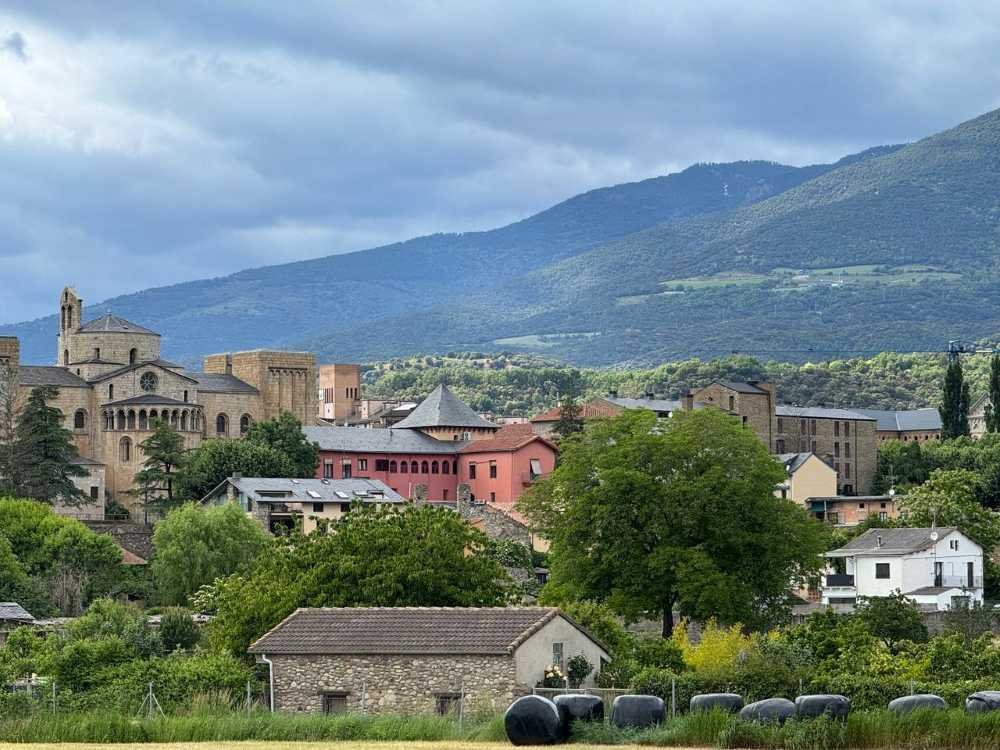
Jaca is the snowiest inhabited town in Spain. Situated at an elevation of 820 meters in the province of Huesca, it is considered the gateway to the Aragonese Pyrenees. The town receives approximately 280 centimeters (110 inches) of snow annually, with snowfall occurring on about 70 days of the year.
The reason for this impressive snowfall is simple: Jaca lies directly in the path where cold storms arriving from the Bay of Biscay and Scandinavia collide with the wall of the Pyrenees. As the cold air rises, it precipitates as snow, and Jaca bears the initial brunt of this process.
The ski resorts located at higher altitudes above the town Candanchú and Astún sit at elevations of 1,500 to 2,000 meters and receive even heavier snowfall; however, the figures cited here refer specifically to the town level.
In Jaca, the snow season lasts from October to April, with the heaviest snowfall occurring in January and February. It is common to see 30 to 50 cm of snowfall within 48 hours, and the Somport mountain pass, a route to France, frequently closes due to the risk of avalanches.
Snow season: October to April
Peak snowfall: January–February
Risk of school closures: Very high
2. Soria, Castile and León
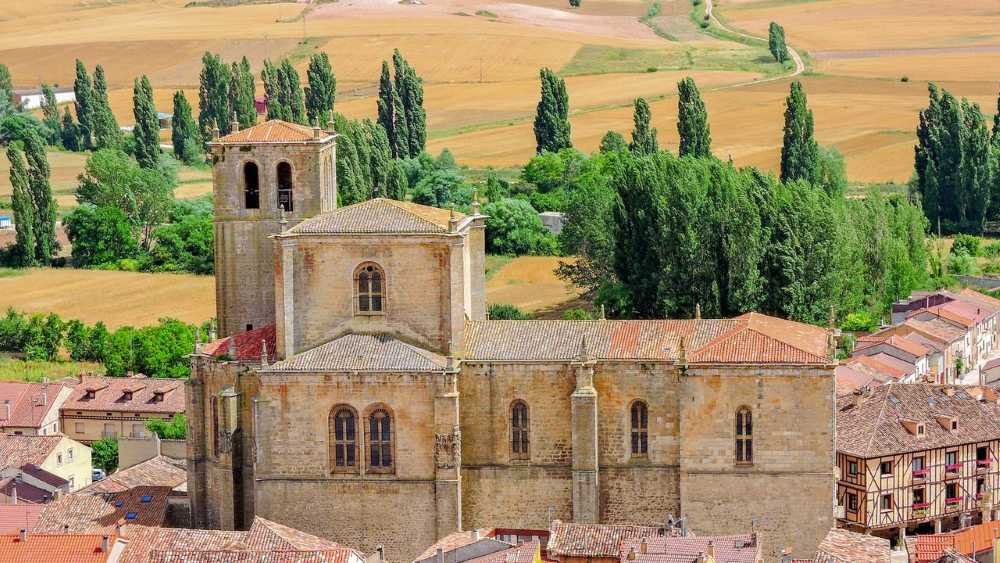
Soria is the snowiest provincial capital in Spain, a fact that surprises many who view it as a quiet, lesser-known city. Situated at an altitude of 1,065 meters on the eastern edge of the Meseta, the city receives an annual snowfall of 139 centimeters (55 inches) and experiences 21.4 days of snowfall per year.
According to AEMET data, excluding mountainous regions, no major Spanish city sees more days of snowfall than Soria.
January is the snowiest month, with an average of 5 days of snowfall, followed closely by February with 5.1 days. Even April sees an average of 2.5 days of snowfall, a figure that exceeds the total winter snowfall of many other Spanish cities.
With a population of 90,000, this city has been accustomed to these conditions for centuries. Its old stone buildings and traditional architecture bear witness to the fact that the city has always been familiar with its winters.
Snow season: November to March (also possible in October and April)
Peak snowfall: January–February
Risk of school closures: High
3. Reinosa, Cantabria
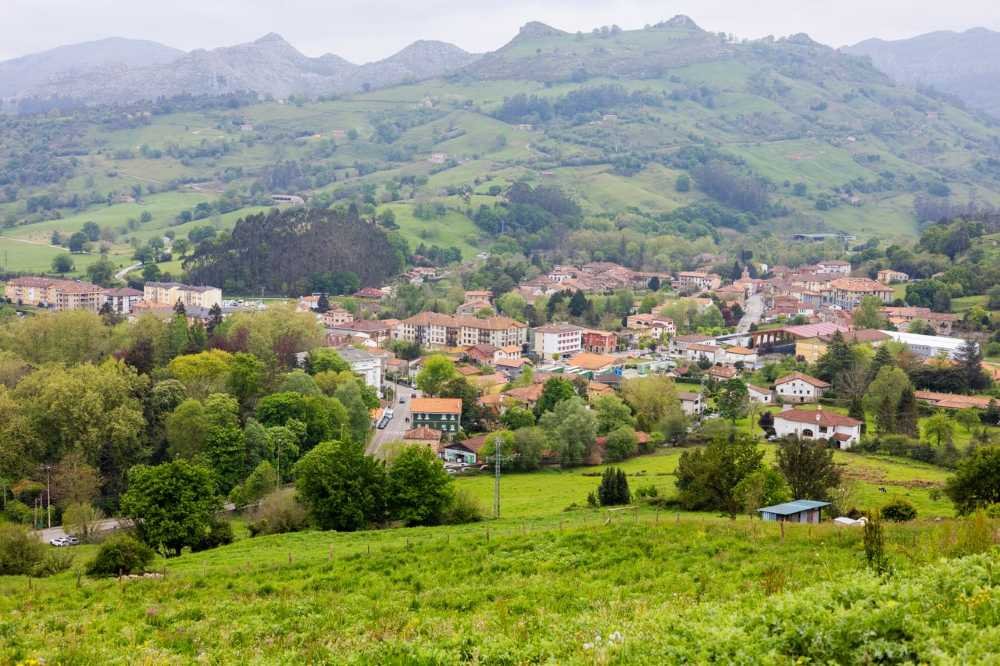
Reinosa is situated at an elevation of 860 meters in the Campoo region of Cantabria and receives approximately 135 centimeters (53 inches) of snow annually. It has a population of around 9,000.
The town experiences a climate vastly different from that of the Cantabrian coast; while coastal areas remain lush and mild year-round, Reinosa sits high in the mountains, where cold Atlantic winds from the Bay of Biscay drop heavy snow as they cross the Cantabrian mountain range.
A temperature of -24.6°C was recorded here on January 4, 1971, one of the lowest temperatures ever recorded at an urban weather station in Spain. This figure speaks for itself regarding the severity of winters in Reinosa.
Snow season: November to March
Peak snowfall: January–February
Risk of school closures: High
4. Ávila, Castile and León
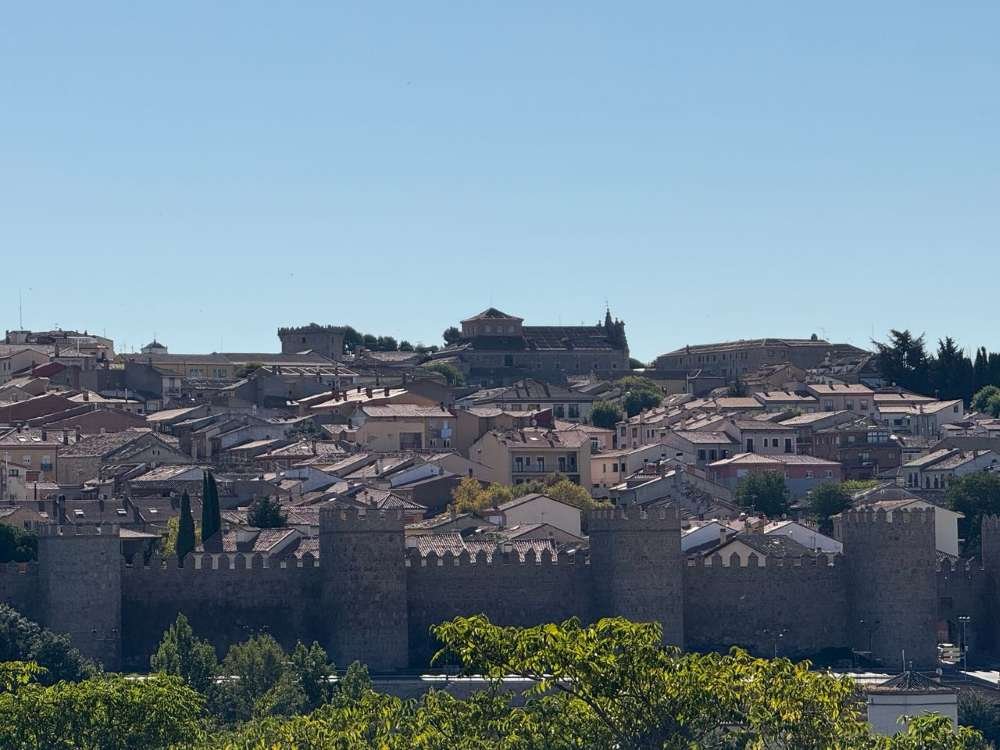
Ávila is Spain’s highest provincial capital; situated at an elevation of 1,131 meters, it receives 131 centimeters (52 inches) of snow annually. It ranks second only to Soria among provincial capitals in this regard, experiencing snowfall on approximately 20 days each year.
Ávila is renowned for its medieval walls that encircle the entire old city, structures that date back a thousand years and are designated as a UNESCO World Heritage site. The sight is truly spectacular in winter when snow settles upon these ramparts.
To the south of the city lies the Sierra de Gredos mountain range, which intercepts moisture-laden Atlantic air and causes it to precipitate as snow. Additionally, cold continental winds from the north affect the area; this combination of factors ensures consistent snowfall.
Snow season: November to March
Peak snowfall: January–February
Risk of school closures: High
5. Burgos, Castile and León
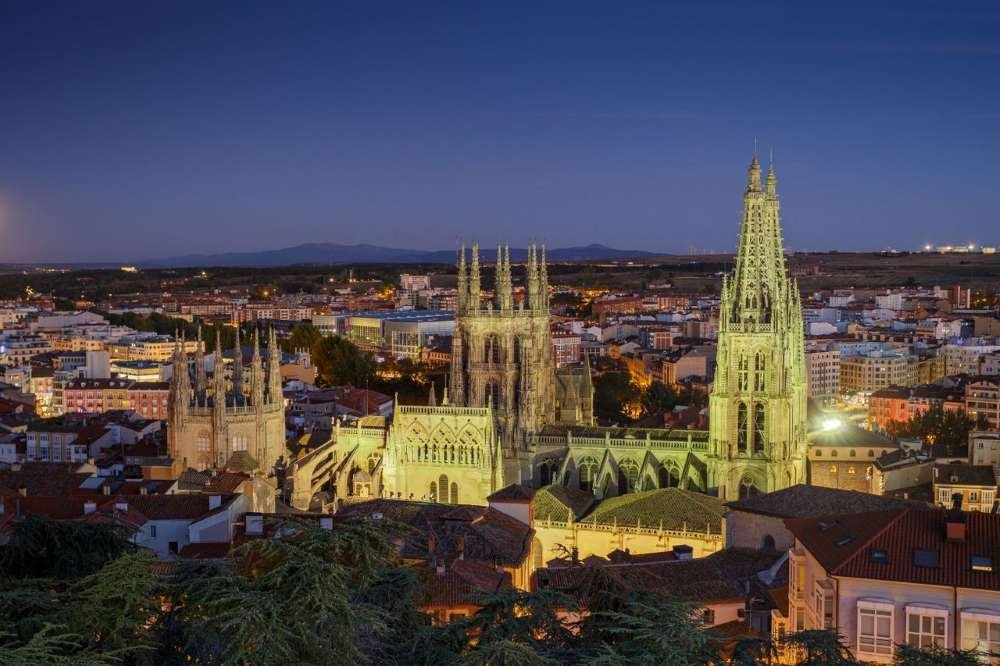
Burgos is situated at an elevation of 859 meters on the northern edge of the Meseta and receives an annual snowfall of 105 centimeters (42 inches). It experiences 18.5 days of snowfall per year, ranking third among provincial capitals, behind only Soria and Ávila. Outside of mountainous regions, it is considered Spain’s snowiest city.
Cold Arctic and continental winds from the north cross the Cantabrian Mountains to reach Burgos, located on the plateau. Snowfall occurs when this cold air meets moisture-laden air arriving from the Atlantic.
Burgos is renowned for its magnificent Gothic cathedral, one of the most beautiful in Europe, and images of the structure blanketed in winter snow are published worldwide. These images are not merely picturesque; they reflect the city’s true climatic reality.
Snow season: November to March
Peak snowfall: January–February
Risk of school closures: Moderate to high
6. Vitoria-Gasteiz, Basque Country
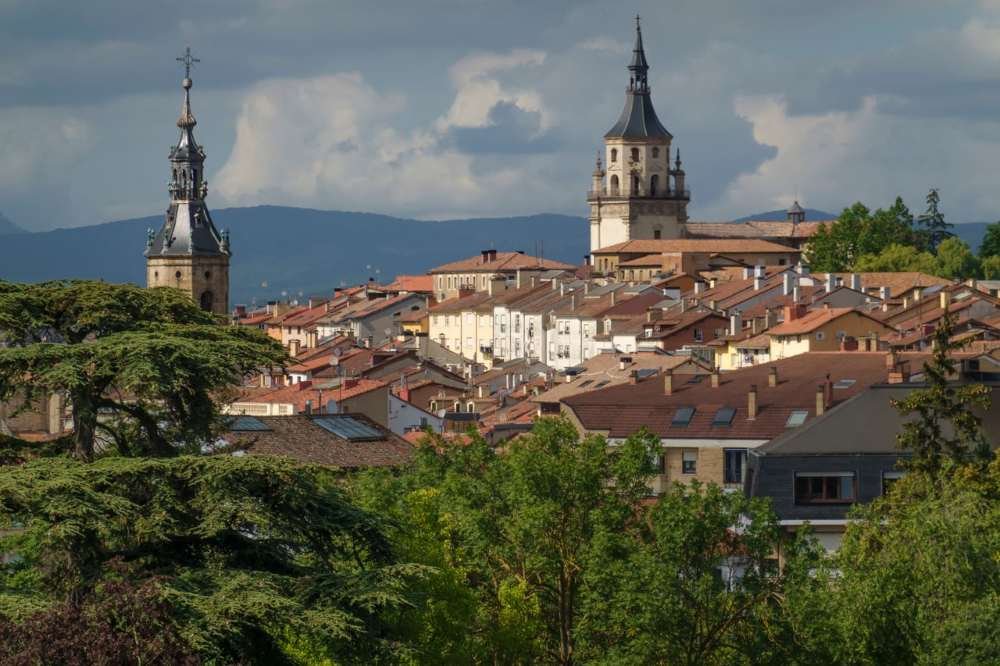
Vitoria-Gasteiz is the capital of the Basque Autonomous Community and one of the snowy cities of northern Spain. Situated on the plains of Álava at an elevation of 570 meters, it receives approximately 65 centimeters (26 inches) of snow annually, with February being the snowiest month.
Coastal Basque cities like Bilbao and San Sebastián remain mild in winter due to the warming influence of the Atlantic. However, Vitoria-Gasteiz lies on the inland plains behind the coastal mountain ranges, where the ocean’s mild air has little effect; the cold winds blowing from the north are keenly felt in this city on the plains.
Vitoria-Gasteiz won the European Green Capital Award in 2012, meaning its green spaces and urban gardens endure genuine winter conditions, rather than a mild southern climate.
Snow season: December to February
Peak snowfall: January–February
Risk of school closures: Moderate to high
7. León, Castile and León
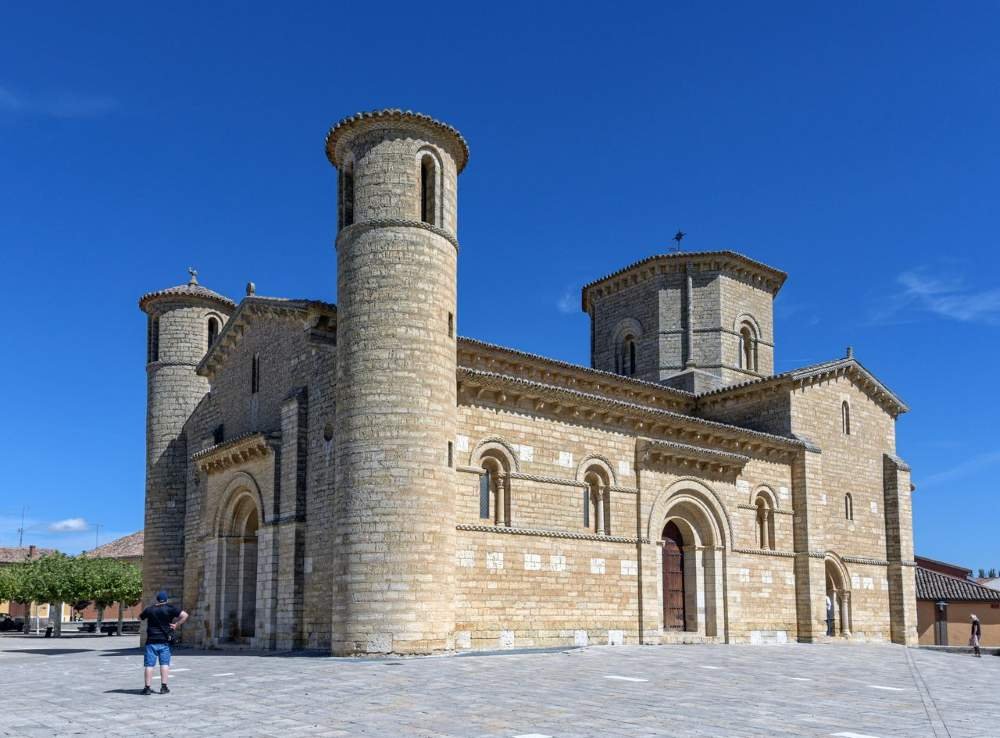
León is situated at an elevation of 837 meters in the northern part of the Meseta. It receives an average of about 50 centimeters (20 inches) of snow annually, with snowfall occurring on 13.6 days of the year.
León’s proximity to the Cantabrian Mountains brings both advantages and disadvantages: cold winds from the north sweep through mountain passes, bringing snow into the city, while the mountains trap clouds that discharge their precipitation here before they can travel further south.
León’s Gothic cathedral, renowned across Europe for its vast stained-glass windows, presents a snow-covered vista frequently seen in tourist photographs; a scene that is entirely real, not merely a coincidence.
Snow season: December to February
Peak snowfall: January–February
Risk of school closures: Moderate
8. Pamplona, Navarre
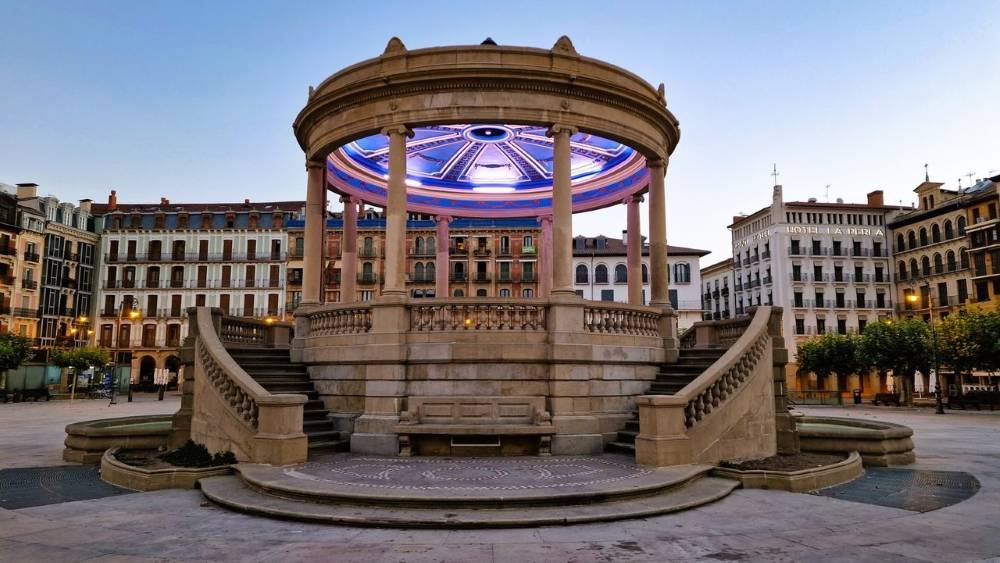
Pamplona is world-renowned for its July bull-running festival, leading many to assume it is a hot city, but the winter landscape tells a completely different story. Situated at an elevation of approximately 450 meters near the foothills of the Pyrenees, this capital of Navarre receives about 40 centimeters (16 inches) of snow annually.
The Pyrenees mountains lie to the north of Pamplona and exert a dual influence: on one hand, they block the coldest winds that would otherwise reach towns like Jaca; on the other, they intercept moisture-laden air from the Bay of Biscay, causing it to fall as snow. The result is regular snowfall throughout the winter- not necessarily extreme, but consistent.
According to AEMET data, Pamplona experiences an average of 9.7 days of snow per year, mostly in January and February.
Snow season: December to February
Peak snow: January
Risk of school closures: Moderate
9. Teruel, Aragon
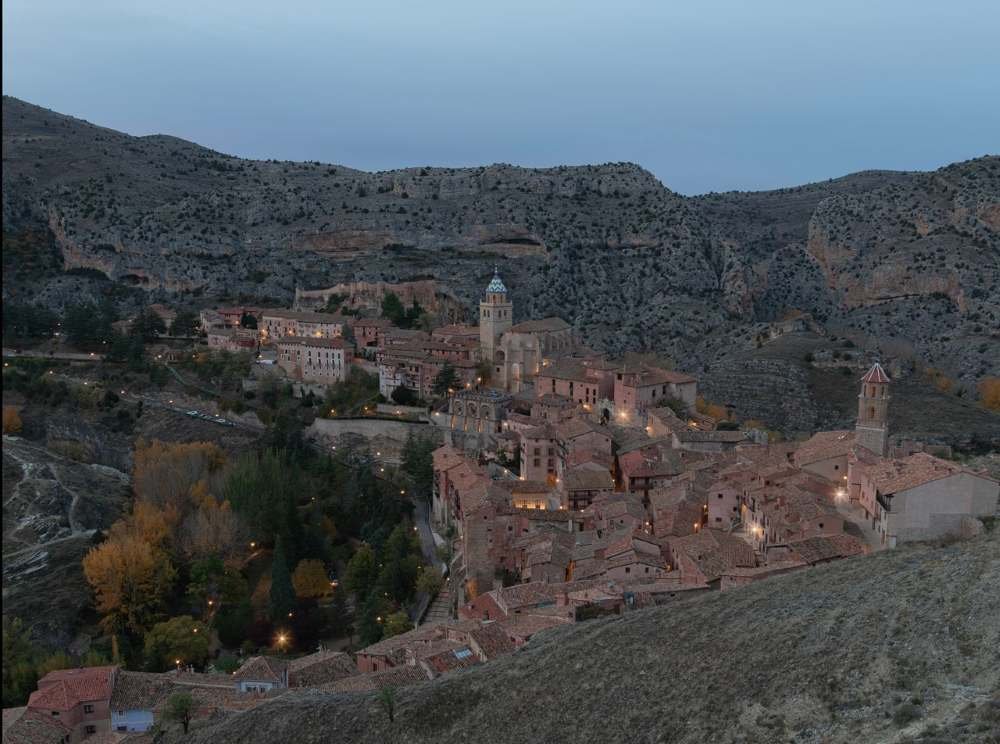
Teruel is the capital of the southern province of Aragon. It is situated on the Iberian Plateau at an elevation of 915 meters and receives approximately 40 centimeters (16 inches) of snow annually. Nearby lie the Javalambre and Valdelinares ski resorts, located at altitudes exceeding 1,700 meters and receiving heavy snowfall, though these figures are not included in this list.
Teruel’s climate reflects the continental nature of the Iberian Plateau: cold winds from the northeast bring snow to the plateau, as the city’s high elevation causes winter precipitation to frequently fall as snow.
A temperature of -30°C was recorded in the nearby town of Calamocha in 1963, the coldest temperature ever recorded in Spain. This illustrates just how severe the conditions can become when Siberian air reaches this region.
Snow season: December to February
Peak snowfall: January–February
Risk of school closures: Moderate
10. Segovia, Castile and León
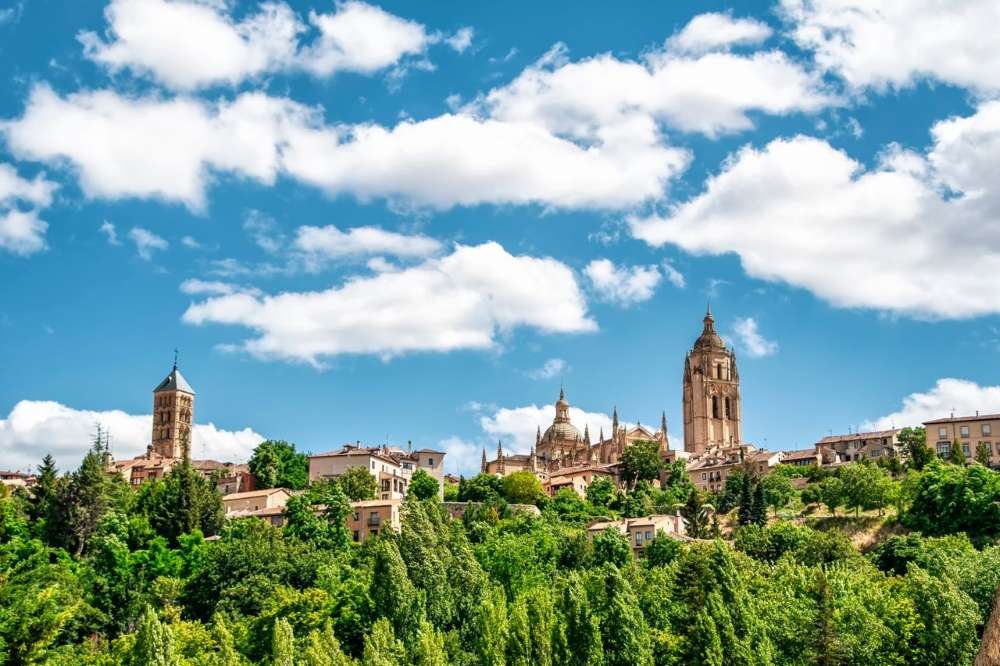
Segovia occupies the final spot on this list with approximately 35 cm (14 inches) of annual snowfall, an elevation of 1,002 meters, and about 13 days of snow per year. It is situated on a rocky hill in the western part of the Meseta, with the Sierra de Guadarrama mountain range lying to its south.
The Guadarrama mountains themselves receive heavy snowfall, particularly at Puerto Navacerrada, located at an altitude of 1,860 meters. However, Segovia is not situated high enough on the plateau for every winter precipitation event to turn into snow.
Segovia’s Roman Aqueduct and Alcázar, blanketed in snow, are among Spain’s most iconic winter scenes. Images capturing the beauty that a 5–10 cm snowfall lends to these ancient structures circulate worldwide, even though, meteorologically speaking, such snowfall is modest by Northern European standards.
Snow season: December to February
Peak snowfall: January
Risk of school closures: Moderate
Spain’s Snowiest Places — Comparison Table
| # | Place | Annual Avg | Peak | Season | Risk |
|---|---|---|---|---|---|
| 1 | Jaca, Aragon | ~280 cm / 110″ | Jan–Feb | Oct–Apr | Very High |
| 2 | Soria, Castile & León | 139 cm / 55″ | Jan–Feb | Nov–Mar | High |
| 3 | Reinosa, Cantabria | ~135 cm / 53″ | Jan–Feb | Nov–Mar | High |
| 4 | Ávila, Castile & León | 131 cm / 52″ | Jan–Feb | Nov–Mar | High |
| 5 | Burgos, Castile & León | 105 cm / 42″ | Jan–Feb | Nov–Mar | Mod-High |
| 6 | Vitoria-Gasteiz, Basque | ~65 cm / 26″ | January | Dec–Feb | Mod-High |
| 7 | León, Castile & León | ~50 cm / 20″ | Jan–Feb | Dec–Feb | Moderate |
| 8 | Pamplona, Navarre | ~40 cm / 16″ | January | Dec–Feb | Moderate |
| 9 | Teruel, Aragon | ~40 cm / 16″ | Jan–Feb | Dec–Feb | Moderate |
| 10 | Segovia, Castile & León | ~35 cm / 14″ | January | Dec–Feb | Moderate |
Why are Spain’s famous cities not on this list?
Madrid sees snow on only 3.6 days a year, roughly the same as London or Rome. Barcelona gets 0.4 days; the last time Valencia saw significant snowfall was in 1983; and Seville experiences snow perhaps once every few decades.
It is not that Spain lacks snow; rather, snowfall is confined to specific geographical areas that most tourists do not visit.
Keep in mind: the total amount of snow Barcelona receives over an entire winter can fall during a single stormy night in Jaca or Soria.
Comparing Spain to Europe
Spain’s snowy locations rank in the middle tier of Europe’s snowfall list. Jaca’s estimated 280 cm would place it third, behind Tromsø, Norway. Soria’s 139 cm is on par with Innsbruck, Austria.
A striking comparison: Sheffield, England’s snowiest city, receives only 50 cm of snow annually, less than half of Soria’s 139 cm. Spain’s interior plateau receives more snow than England’s snowiest city.
Compared to snowy locations in Germany, Suria’s 139 cm exceeds that of Munich (60 cm) and Rosenheim (85 cm), though Oberstdorf tops the German list with 200 cm.
If you want to know the likelihood of school closures due to snow in a U.S. city, the “Snow Day Predictor” provides real-time forecasts based on your ZIP code.
FAQ’s
Soria tops the list among provincial capitals, with approximately 139 cm of annual snowfall and 21.4 snowy days. Among all inhabited locations, Jaca (Aragon), situated at the foot of the Pyrenees, leads with around 280 cm annually.
Yes, but not often. On average, it snows 3.6 days a year in Madrid. In January 2021, Storm Filomena dumped 50 centimeters of snow, causing extraordinary chaos in the city, an event that serves as proof that Madrid’s infrastructure is not prepared for snow.
Rarely. Barcelona averages 0.4 snow days per year. The city’s Mediterranean coastal position and low elevation (sea level) mean that Arctic air masses rarely reach it cold enough to produce snow. When they do, a few centimetres cause significant disruption because the infrastructure is not designed for it.
Elevation and position on the Meseta. Soria sits at 1,065 metres, over 400 metres higher than Madrid. At that elevation in the Spanish interior, winter precipitation converts to snow reliably whenever cold air arrives. Madrid at 650 metres sits at the temperature boundary where cold air events produce snow sometimes and rain at other times.
January and February are the reliable months for experiencing snow in Spain’s snowiest cities. Jaca, Soria, Ávila, and Burgos typically maintain snow cover through these months. The Pyrenean ski resorts above Jaca and in Catalonia (Baqueira Beret, Formigal, Candanchú) operate from December through April in most years.
Spain’s winter infrastructure, particularly in the plateau cities and southern regions, is less robust than northern European countries. A 15-centimetre snowfall in Soria or Ávila is managed by local services that are accustomed to it. The same amount in a southern Spanish city that rarely sees snow can trigger closures that northern European cities would not consider for twice the accumulation.