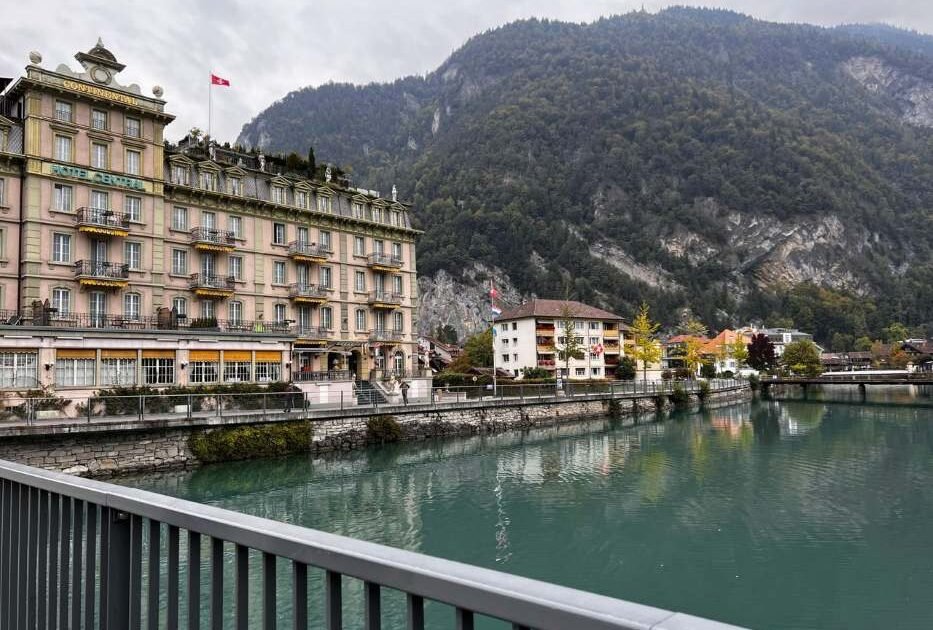
Top 10 Snowiest Cities in Switzerland
722 centimetres. That is the annual snowfall average for Arosa, Switzerland. More than twice the total for Marquette, Michigan, which is the snowiest city in the United States. More than five times what Innsbruck, Austria, records in a year.
Arosa has 2,500 residents.
Switzerland is in a category of its own for Alpine snowfall. The country sits at the meeting point of Atlantic moisture systems, Mediterranean circulation, and Arctic continental airflows, and the Alps force all of that moisture upward into intense precipitation. The result is that Switzerland’s snowiest inhabited towns receive totals that would be extraordinary anywhere else in Europe.
This list ranks the 10 snowiest Swiss towns and cities using MeteoSwiss climate normals from the 1981 to 2010 reference period, published via the Federal Office of Meteorology and Climatology. Town and city level station data only. Mountain peak observation stations, including Santis at 2,502 metres and Weissfluhjoch at 2,690 metres, are not included as no one lives there.
All of Switzerland’s 10 snowiest places sit above 1,000 metres. The well-known lowland cities such as Zurich (56 cm), Bern (53 cm), Geneva (32 cm), and Basel (37 cm) do not appear on this list. The snowfall geography of Switzerland is almost entirely a story of altitude.
How We Ranked These Towns
Snow days refer to occasions when fresh snow accumulated at least one centimetre.
Switzerland’s snowfall follows three geographical patterns. First, high Alpine basins and valleys that sit inside mountain barriers, where orographic lift is strongest and snowfall events are most intense. Arosa, Davos, and Adelboden represent this group. Second, north-facing Alpine approaches where Atlantic moisture hits the first major barrier, producing very high totals at moderate elevations. Engelberg and Disentis fall into this category. Third, the Jura mountains of western Switzerland, where a different mechanism driven by cold lake air from Lake Geneva and northerly continental airflow produces surprisingly high snowfall at the 1,000 metre level. La Chaux-de-Fonds is the main representative of this third group.
10 Snowiest Cities and Towns in Switzerland
1. Arosa, Graubunden
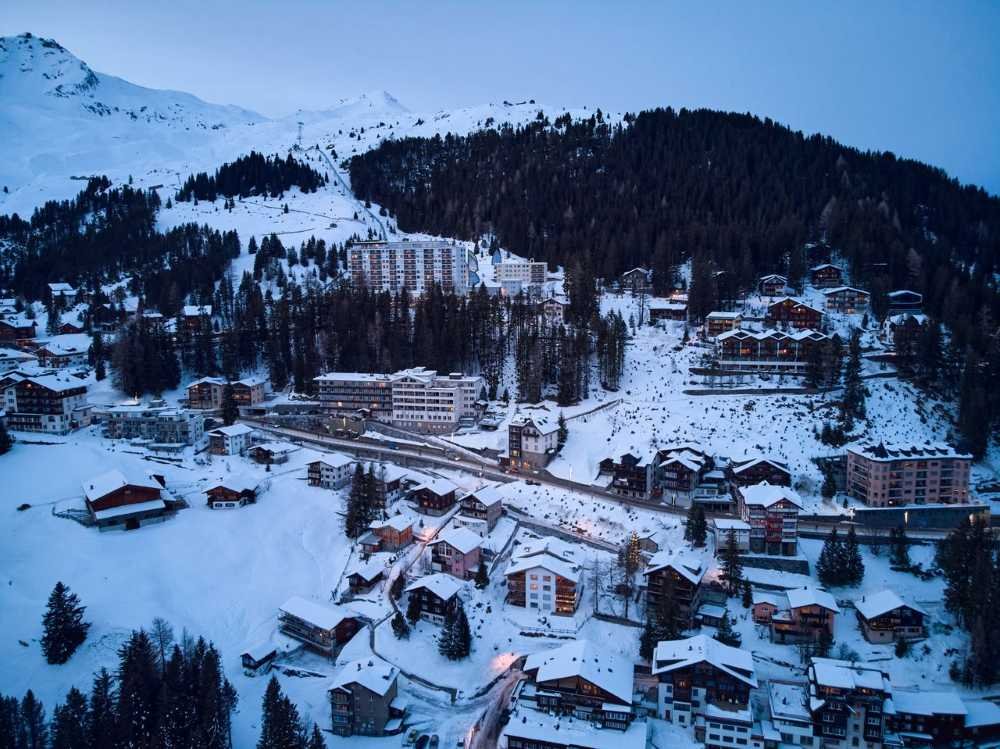
Arosa is the snowiest inhabited place in Switzerland. Sitting at 1,739 metres in a high Alpine basin in the canton of Graubunden, it averages 722.6 centimetres (284.5 inches) of snow per year across 88 snow days. Those figures represent the official MeteoSwiss long-term average and they are not outliers from a single exceptional season.
The reason for those totals is Arosa’s bowl geography. The town sits inside a natural amphitheatre formed by the Aroser Weisshorn (2,653 metres) and the surrounding Plessur Alps. Winter storm systems approaching from the west and northwest are forced to rise sharply as they enter the basin, losing moisture rapidly as snow at the point of maximum orographic lift. Arosa does not just sit in the mountains. It sits at the point where the mountain geometry concentrates precipitation into the valley floor.
With 88 snow days per year, Arosa has snow falling, on average, nearly every other day throughout the October to May season. January and February are the peak months. Events exceeding 50 centimetres over a 48 to 72 hour period occur multiple times in most winters, and the ground snow depth at the town level regularly exceeds one metre from December through March.
For context on how extraordinary 722 centimetres is: the mountain observation station Weissfluhjoch, perched at 2,690 metres directly above Davos, records 980 centimetres. Arosa at town level, at 1,739 metres, is recording totals in the same order of magnitude as a 2,690 metre alpine observatory. This reflects how efficiently the Arosa basin captures and concentrates precipitation.
The town’s infrastructure is built entirely around its winter reality. Snow clearance operations run continuously from November through April. School in Arosa operates through conditions that would trigger closures in most European countries, because the local expectation is that heavy snow is a constant feature of life rather than an exceptional event.
Snow season: October through May
Peak months: January through February
Closure risk: Very High
2. San Bernardino, Graubunden
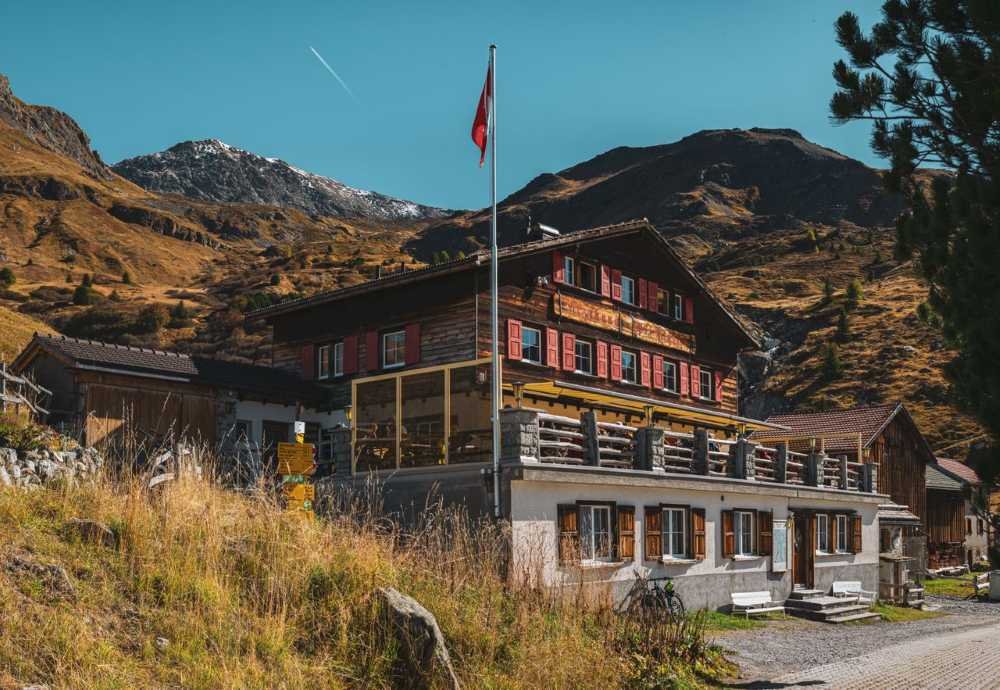
San Bernardino is a small mountain village in the canton of Graubunden, sitting at 1,639 metres near the San Bernardino Pass that connects the canton to the Italian-speaking canton of Ticino to the south. The MeteoSwiss station records an annual snowfall average of 521.7 centimetres (205.4 inches) across 51 snow days.
The San Bernardino area sits at the meeting point of two distinct weather regimes. Atlantic systems approaching from the northwest bring moisture over the Graubunden Alps, while Mediterranean moisture pushes north from the Italian side of the Alps through the Ticino valley. The pass position means the village sits directly in the path of both systems, and when cold air from the north intercepts Mediterranean moisture from the south, the result is exceptionally heavy snowfall at the pass elevation.
The village is small, with a permanent population of a few hundred people. Unlike the major Alpine resort towns on this list, San Bernardino does not have a large ski resort infrastructure. Its snowfall is simply a consequence of geography, and the village’s services reflect a community that has dealt with over 500 centimetres of annual accumulation for generations.
The San Bernardino Pass road, one of the main transit routes between northern and southern Switzerland, closes regularly for avalanche control during heavy snowfall events. The pass itself sits at 2,066 metres, and the road management required to keep it open is a year-round seasonal operation.
Snow season: November through April
Peak months: January through February
Closure risk: Very High
3. Davos, Graubunden
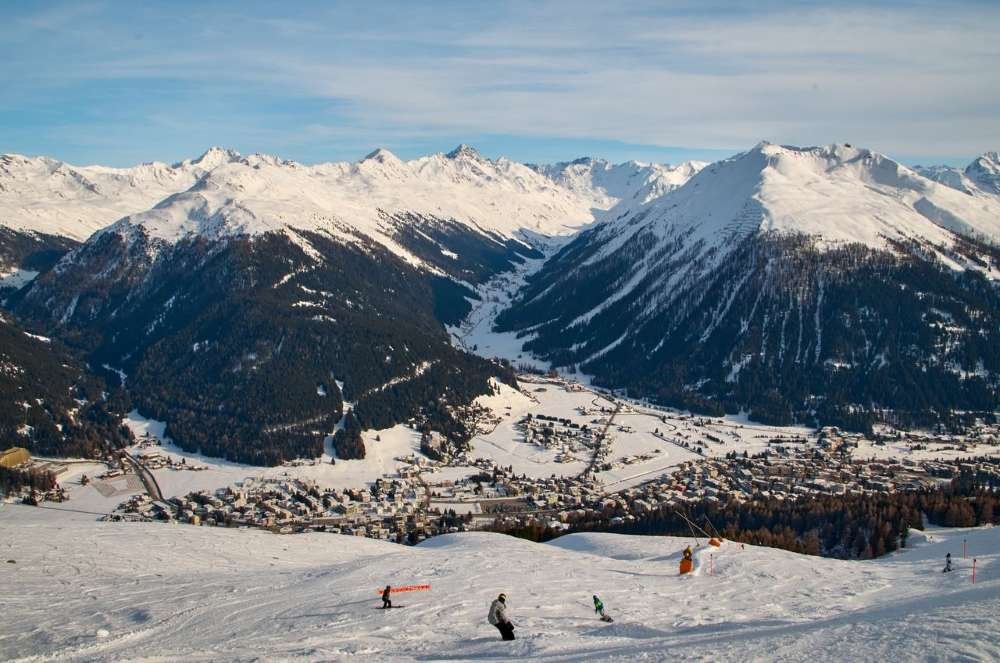
Davos is the most internationally recognised name on this list. The town of around 11,000 people sits at 1,560 metres in the Landwasser valley in the canton of Graubunden, and it averages 468.0 centimetres (184.3 inches) of annual snowfall across 69 snow days. Hosting the annual World Economic Forum does not explain the snowfall totals, but they are in the same order of conversation.
Davos sits in a broad valley that channels cold air from the surrounding peaks, and its north-facing position within the Graubunden Alps means it receives both Atlantic systems from the west and continental cold air from the northeast. The Davos area is also where MeteoSwiss operates the Weissfluhjoch research station at 2,690 metres, the highest meteorological observation point in the Swiss snowfall network. The station above Davos recording 980 centimetres of annual snowfall illustrates the gradient between the valley floor (468 cm) and the mountain peaks overhead.
With 69 snow days per year, Davos has snow falling roughly every other day throughout its October to May season. The town’s ski area, including the Parsenn, Jakobshorn, and Pischa sectors, operates on the same snowfall that buries the town centre. Davos operates as a genuinely dual-season resort economy, with the physics of its winters giving it a snow reliability that most Alpine resort towns can only attempt to replicate through artificial snow production.
The Davos school district and local services operate through conditions that would shut down cities across Central Europe without hesitation. Life in Davos does not pause for snowfall. It adjusts, routes around the fresh accumulation, and continues.
Snow season: October through May
Peak months: January through February
Closure risk: Very High
4. Montana (Crans-Montana), Valais
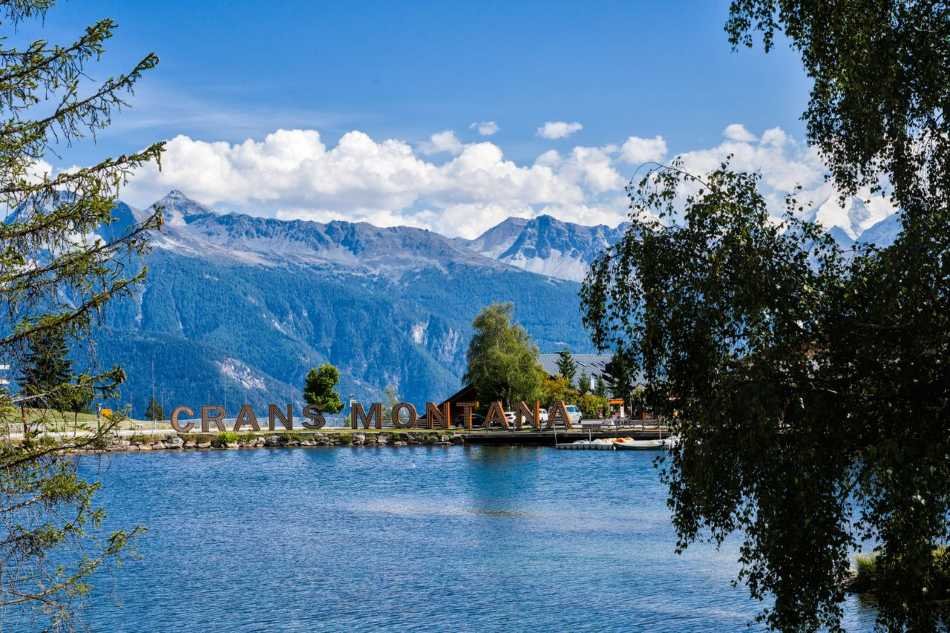
Montana, known in full as Crans-Montana, is a resort community in the canton of Valais sitting at approximately 1,452 metres on a south-facing plateau above the Rhone valley. It averages 435.8 centimetres (171.6 inches) of annual snowfall across 47 snow days, which places it fourth in Switzerland by annual accumulation.
The south-facing aspect of the Crans-Montana plateau creates a weather pattern that differs from the north-facing Alpine towns higher on this list. Mediterranean moisture systems approaching from the south are deflected upward by the Valais Alps when they push north from Italy. The plateau sits at just the right elevation to intercept that orographic precipitation before it can spill further north across the main Alpine divide. The result is consistent, heavy snowfall from November through April with notably good sun exposure between events, which is one reason Crans-Montana has developed as a high-end resort destination.
The resort area sits above Sierre in the Rhone valley, which itself averages only 44.5 centimetres of snow annually at its valley floor elevation. The 400 centimetre difference between the valley and the plateau, across a vertical distance of roughly 900 metres, illustrates precisely how the Alpine snowfall gradient operates in Valais.
January and February are the peak months. The resort infrastructure of Crans-Montana is built around its snowfall reliability, and the town’s permanent population of several thousand people operates through the season with the practicality of an Alpine community that has no alternative.
Snow season: November through April
Peak months: January through February
Closure risk: Very High
5. Adelboden, Bern
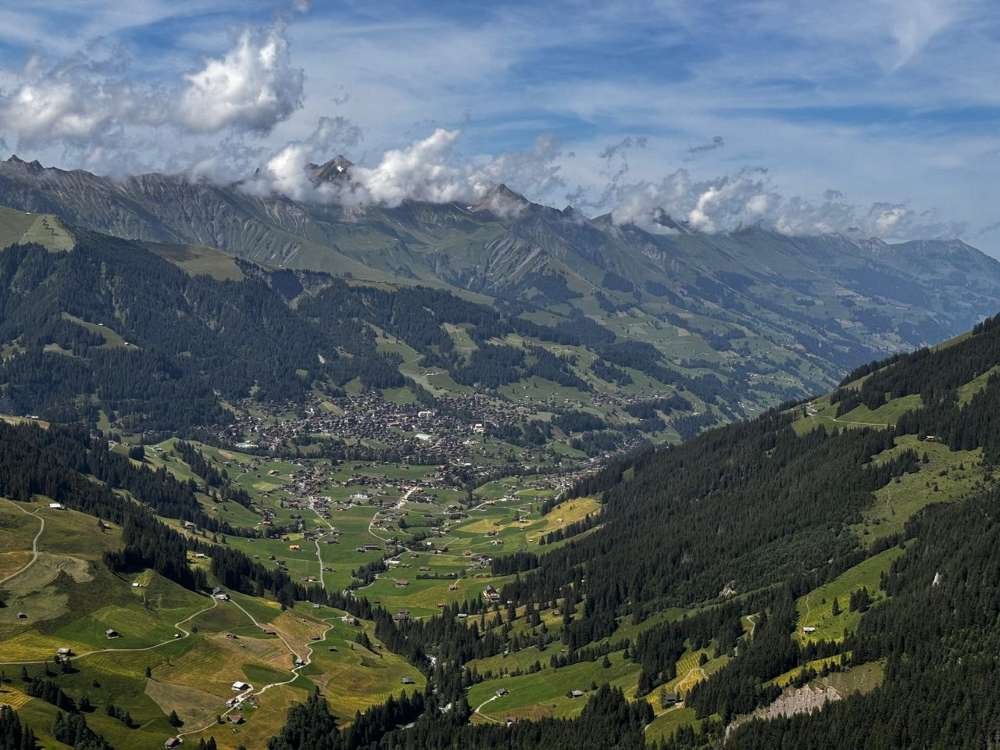
Adelboden is a mountain village of around 3,500 people in the Bernese Alps, sitting at 1,353 metres in the upper Engstlige valley in the canton of Bern. It averages 422.2 centimetres (166.2 inches) of annual snowfall across 53 snow days, making it the snowiest settlement in the canton of Bern by annual accumulation.
The Engstlige valley is oriented north to south, which means cold northerly airflow from the Swiss Plateau pushes directly into the valley and is forced upward by the valley walls and surrounding peaks. The Bernese Alps above Adelboden include peaks well above 3,000 metres, and the orographic enhancement from these walls gives Adelboden snowfall totals that significantly exceed what its 1,353 metre elevation would produce in a less sheltered setting.
Adelboden hosts one of the most prestigious events on the alpine ski World Cup circuit, the slalom and giant slalom races held on the Chuenisbärgli course each January. The event is scheduled for January specifically because the snowfall reliability in that month is among the highest in the Swiss race calendar. What works for World Cup racing works equally well for 53 snow days per year at village level.
The village school and local services operate through the full weight of the Adelboden winter. Children at Adelboden’s schools are accustomed to conditions that would be exceptional anywhere on the lower Swiss Plateau, and the local skiing culture means that heavy snow is regarded as a community asset rather than a disruption.
Snow season: October through May
Peak months: January through February
Closure risk: Very High
6. Engelberg, Obwalden
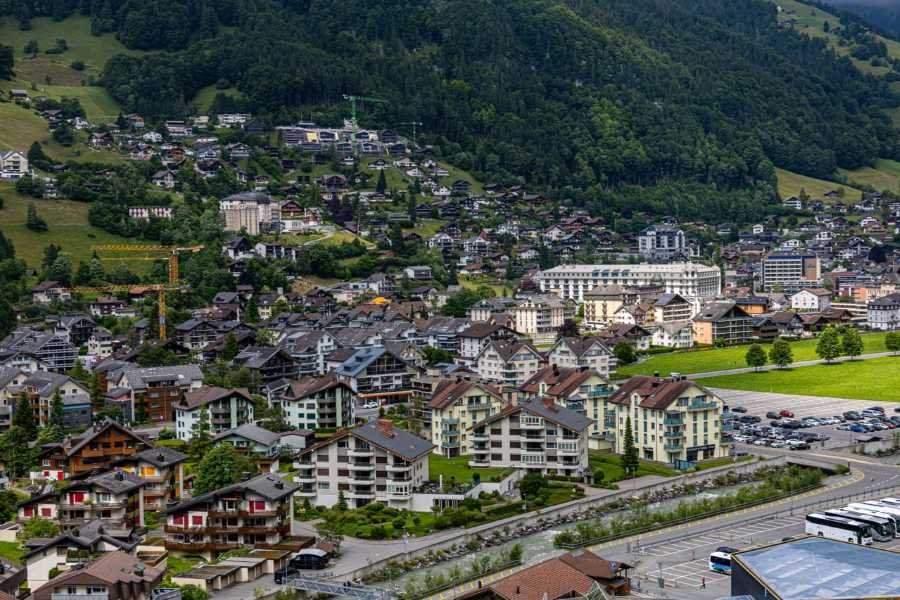
Engelberg holds a distinctive position on this list. At 1,036 metres elevation in the canton of Obwalden in central Switzerland, it is the lowest-elevation town in the top six, yet it averages 414.3 centimetres (163.1 inches) of annual snowfall across 48 snow days. Getting 414 centimetres of snow at 1,036 metres requires exceptional weather conditions, and Engelberg has them.
The town sits at the bottom of a narrow valley that cuts deep into the Uri Alps, with the Titlis massif rising to 3,238 metres directly above it. Atlantic moisture systems approaching from the northwest hit the Uri Alps abruptly and with minimal warning. The valley acts as a funnel, channelling orographic precipitation directly down toward the valley floor. By the time the snow has fallen from the cloud base to the 1,036 metre valley floor, Engelberg accumulates totals that rival or exceed towns sitting several hundred metres higher in less-efficiently positioned valleys.
The Titlis ski area above Engelberg is one of the most reliable snow venues in central Switzerland, with the summit glacier providing year-round skiing. But the snowfall at valley level, independently of the Titlis summit data, already ranks sixth in the country.
Engelberg is also home to the Benedictine monastery founded in 1120, which has operated continuously through centuries of heavy Alpine winters. The monastery and the mountain have coexisted for over 900 years, and the institution’s long history reflects a community that has made permanent peace with its winter.
Snow season: November through April
Peak months: January through February
Closure risk: Very High
7. Disentis/Sedrun, Graubunden
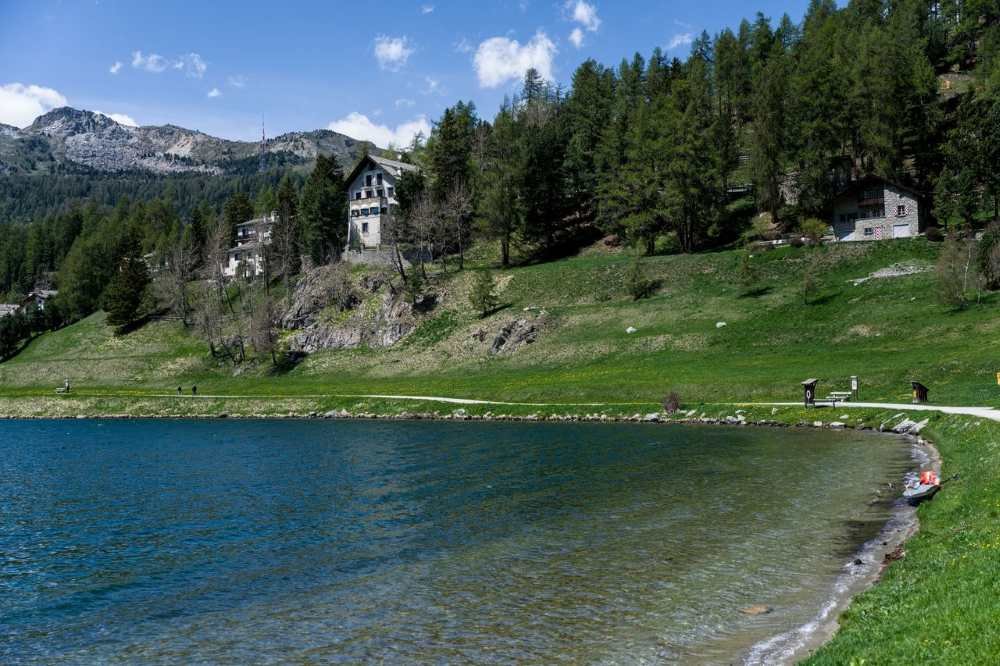
Disentis/Sedrun is a bilingual Alpine town in the Surselva region of Graubunden, sitting at 1,133 metres in the upper Rhine valley. The MeteoSwiss station records 381.7 centimetres (150.3 inches) of annual snowfall across 52 snow days. The town serves as the southern terminus of the Andermatt ski area connection and hosts one of Switzerland’s oldest monasteries, founded in the 7th century.
The upper Rhine valley runs roughly east to west in this section, and the valley orientation means that Atlantic systems from the west push directly into the valley and release their moisture against the surrounding Medel and Gotthard massifs. The result is consistent snowfall events throughout winter, reinforced by cold continental air that pools in the upper Rhine valley during high pressure periods and reduces temperatures enough to convert marginal precipitation into snow.
With 52 snow days per year, Disentis receives snow on approximately one in every three days throughout its November to April season. The total of 381.7 centimetres reflects an accumulation pattern where no single event is extreme by Swiss Alpine standards, but the frequency is high enough that total annual accumulation reaches levels that would be exceptional outside Switzerland.
The local school district serves a community that treats its winters with the matter-of-fact familiarity of people who have never known a mild one. Disentis has been a winter community since the monastery was built 13 centuries ago, and its relationship with seasonal snow predates modern snow management infrastructure by an enormous margin.
Snow season: November through April
Peak months: January through February
Closure risk: High
8. Evolene, Valais
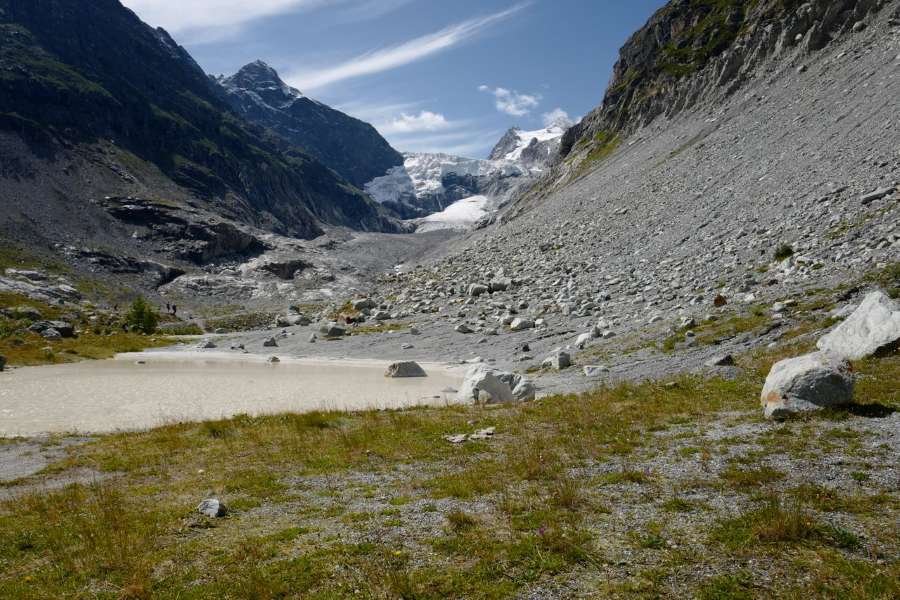
Evolene is a traditional Valais mountain village of around 1,700 people, sitting at 1,371 metres in the Val d’Herens in the canton of Valais. The MeteoSwiss station records 311.5 centimetres (122.6 inches) of annual snowfall across 50 snow days. The village is one of the most photographed traditional Alpine communities in Switzerland, known for its preserved wooden chalets and local dialect.
The Val d’Herens cuts south from the Rhone valley into the High Valais Alps, with peaks rising above 4,000 metres in the surrounding massifs. The valley orientation channels southerly Mediterranean moisture flows northward when conditions align, and the combination of altitude, valley geometry, and competing Atlantic and Mediterranean weather systems produces consistent winter snowfall. Fifty snow days per year at village level reflects a reliable pattern rather than occasional extreme events.
Evolene sits below Les Hauderes and several high mountain hamlets that receive even more snow, including Arolla at 1,996 metres, which MeteoSwiss data does not separately list. The lower village at 1,371 metres is already firmly in the high-snowfall category by any European comparison.
The village maintains its traditional Alpine character partly because the winter conditions have historically limited the kind of large-scale development that has transformed other Valais resorts. Evolene receives over 300 centimetres of snow annually and has done so for generations, which shapes the physical character of its buildings and the practical expectations of its permanent residents.
Snow season: November through April
Peak months: January through February
Closure risk: High
9. La Chaux-de-Fonds, Neuchatel
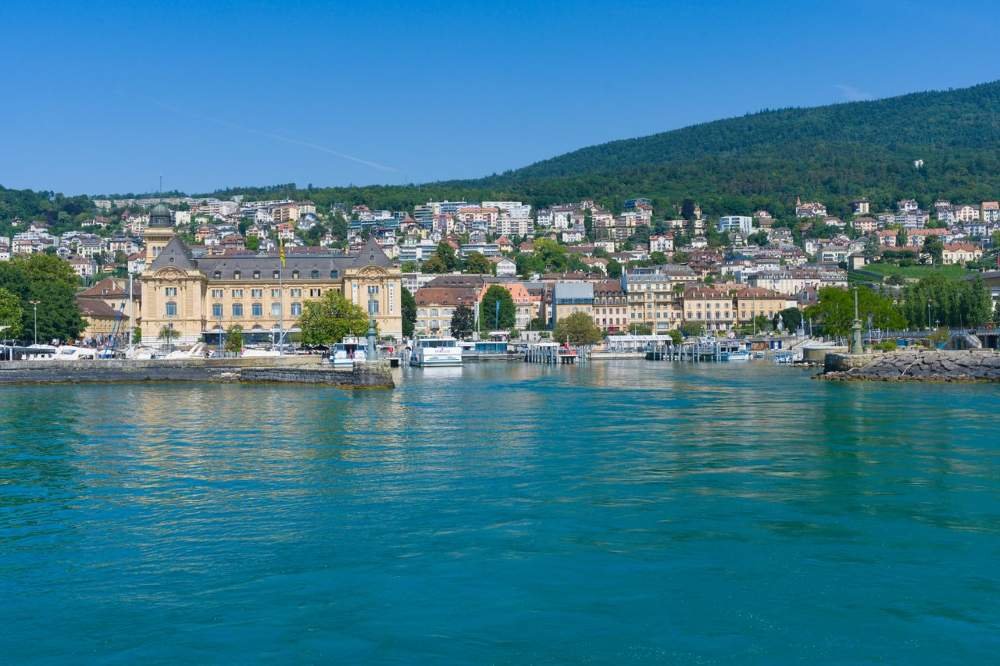
La Chaux-de-Fonds is the most unexpected entry on this list. It is not an Alpine resort town. It is a real industrial city of around 37,000 people in the canton of Neuchatel in western Switzerland, built on the wealth of the Swiss watchmaking industry, and it is a UNESCO World Heritage Site for its remarkable grid-pattern urban planning. It also gets 287.4 centimetres (113.1 inches) of snow per year across 45 snow days.
The city sits at 1,000 metres in the Jura mountains, on a high plateau that is exposed to northerly cold airflow from across the Swiss Plateau and Lake Neuchatel below it. Cold air from Germany and France pours southward through the Jura valleys and hits the La Chaux-de-Fonds plateau with enough moisture and cold to produce consistent snowfall throughout winter. The Jura mechanism is different from the Alpine orographic lift that drives snowfall in the mountain towns above it on this list. It is a combination of cold pooling, plateau exposure, and northerly continental moisture that operates at the 1,000 metre level without the dramatic mountain walls of the Alpine interior.
The practical consequence is that La Chaux-de-Fonds is frequently cited as the coldest city in Switzerland and one of the snowiest. It is also the city where Corbusier, one of the most influential architects of the 20th century, was born and trained, and the snow-adapted character of the city’s planning and architecture reflects its climate.
School closures in La Chaux-de-Fonds happen on terms that would surprise visitors from Geneva or Zurich. The city is 45 snow days deep into its winter every year. It has infrastructure and cultural expectations shaped by centuries of Jura winters, not by the mild lakeside climate of the lowland Swiss cities.
Snow season: November through March
Peak months: January through February
Closure risk: High
10. Zermatt, Valais
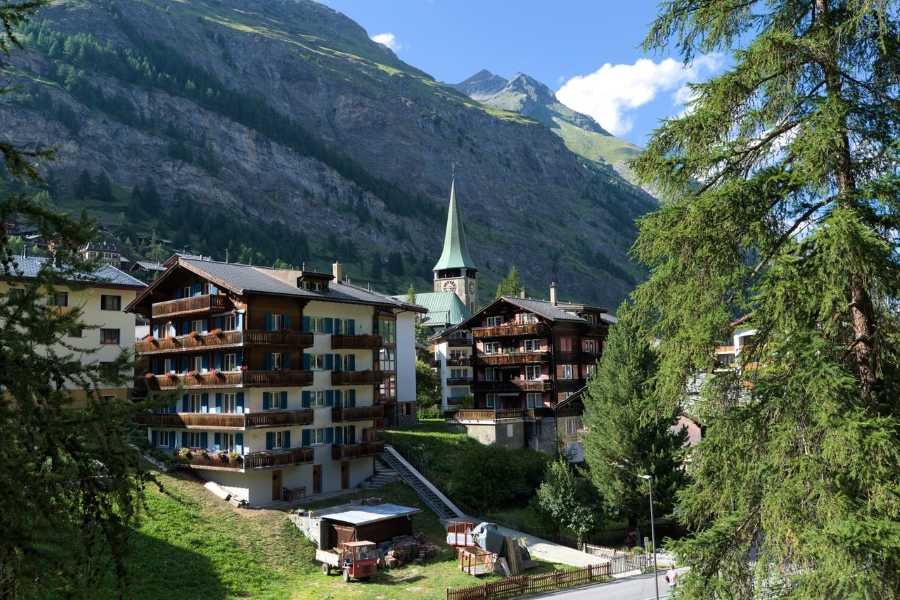
Zermatt is the most internationally famous name on this list, and its position at tenth place will surprise many people who associate it with extreme Alpine weather. The town sits at 1,608 metres below the Matterhorn in the canton of Valais and averages 263.8 centimetres (103.9 inches) of annual snowfall across 40 snow days.
Zermatt’s snowfall total is genuine and significant. At 263.8 centimetres, it would rank comfortably in the top five European cities for annual snow accumulation, above Oslo, Helsinki, and every city in the United Kingdom and Germany. The reason it ranks tenth in Switzerland is that the Swiss internal competition is simply extraordinary. Any other European country would consider Zermatt’s snowfall as one of the most remarkable totals on the continent.
The Matterhorn massif, rising to 4,478 metres directly above the town, creates snowfall patterns in the Zermatt valley that are partly about the mountain’s visual drama and partly about the meteorological reality of that altitude. The valley is car-free (electric vehicles only), which reflects both the town’s environmental positioning and the practical reality that managing vehicle traffic through 40 annual snow events in a mountain valley would be deeply complicated.
The Zermatt ski area extends up to 3,883 metres on the Klein Matterhorn, where year-round skiing is possible on permanent glacier terrain. At town level, the 263.8 centimetres is what residents and year-round workers deal with throughout the season.
Snow season: November through April
Peak months: January through February
Closure risk: High
Switzerland’s Snowiest Towns — Comparison Table
| # | Town | Annual Avg | Snow Days | Peak | Season | Risk |
|---|---|---|---|---|---|---|
| 1 | Arosa | 722.6 cm / 285″ | 88 | Jan–Feb | Oct–May | Very High |
| 2 | San Bernardino | 521.7 cm / 205″ | 51 | Jan–Feb | Nov–Apr | Very High |
| 3 | Davos | 468.0 cm / 184″ | 69 | Jan–Feb | Oct–May | Very High |
| 4 | Montana | 435.8 cm / 172″ | 47 | Jan–Feb | Nov–Apr | Very High |
| 5 | Adelboden | 422.2 cm / 166″ | 53 | Jan–Feb | Oct–May | Very High |
| 6 | Engelberg | 414.3 cm / 163″ | 48 | Jan–Feb | Nov–Apr | Very High |
| 7 | Disentis/Sedrun | 381.7 cm / 150″ | 52 | Jan–Feb | Nov–Apr | High |
| 8 | Evolène | 311.5 cm / 123″ | 50 | Jan–Feb | Nov–Apr | High |
| 9 | La Chaux-de-Fonds | 287.4 cm / 113″ | 45 | Jan–Feb | Nov–Mar | High |
| 10 | Zermatt | 263.8 cm / 104″ | 40 | Jan–Feb | Nov–Apr | High |
How Switzerland Compares to the Rest of Europe
Switzerland is in a different category from the rest of Europe for Alpine snowfall. On the full European snowfall ranking, Murmansk leads Europe at 280 centimetres and Innsbruck reaches 170 centimetres. Arosa’s 722 centimetres is more than double Murmansk and over four times Innsbruck. Swiss Alpine towns are simply operating at a different scale of winter than anywhere else in Europe.
For comparison with Germany’s snowiest places, Oberstdorf leads at 200 centimetres. That would not make the Swiss top 10. Even La Chaux-de-Fonds at tenth place on the Swiss list (287 cm) beats Oberstdorf by nearly 90 centimetres.
Spain’s snowiest places top out with Jaca at approximately 280 centimetres. Zermatt, Switzerland’s tenth-snowiest town, is comparable to Jaca at the top of Spain’s list.
If you want to predict whether school will close on a winter storm day in a US and Canada, the snow day predictor runs your ZIP code against real-time National Weather Service data and returns a probability based on your local conditions.
FAQ’s
Arosa, in the canton of Graubunden, is the snowiest inhabited place in Switzerland with 722.6 centimetres (284.5 inches) of annual snowfall based on MeteoSwiss 1981 to 2010 climate normals. It sits at 1,739 metres in a high Alpine basin and receives 88 snow days per year.
Davos averages 468 centimetres (184.3 inches) of annual snowfall across 69 snow days per year. It is the third-snowiest town in Switzerland. The observation station above Davos at Weissfluhjoch (2,690 metres) records 980 centimetres per year, though that represents the mountain peak above the town rather than town-level conditions.
By global standards, yes. Zurich averages 56.2 centimetres of annual snowfall and 15 snow days per year. By Swiss standards, it ranks well below the Alpine towns on this list. Zurich sits at 410 metres in the Swiss Plateau and its winter is significantly milder than the Alpine interior.
La Chaux-de-Fonds sits at 1,000 metres in the Jura mountains, exposed to cold northerly airflow from across the Swiss Plateau. Cold air from Germany and France pools on the plateau and brings consistent moisture, producing 287.4 centimetres of annual snowfall. It is the mechanism of the Jura uplands rather than Alpine orographic lift, but the result at the 1,000 metre level is comparable to many Alpine towns.
January and February are the peak months across all Swiss Alpine towns on this list. Snowfall begins reliably in October or November and continues through April or May at the highest-elevation locations. La Chaux-de-Fonds follows a slightly shorter season, typically from November through March.