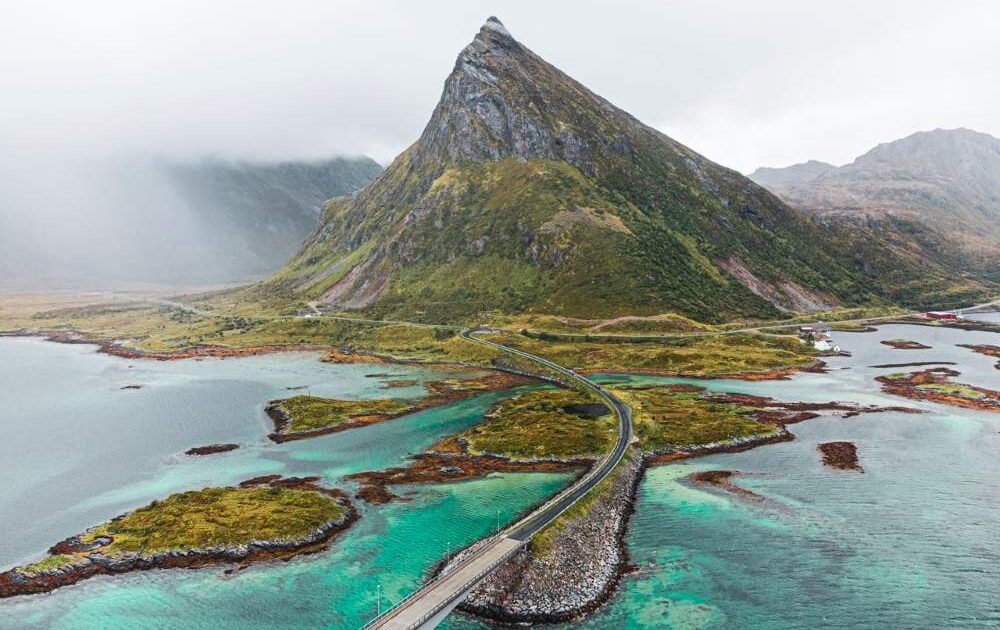
Top 10 Snowiest Cities in Norway
Oslo gets about 80 centimetres of snow per year.
That might surprise you. For a country with Norway’s reputation, 80 centimetres is not extraordinary. Duluth, Minnesota averages something similar. Oslo sits on the coast at 23 metres above sea level, and the same Atlantic Gulf Stream influence that keeps western Europe warmer than its latitude suggests does the same thing for Norway’s capital. The coast is mild. The mountains are not.
The real Norwegian snow is somewhere else entirely.
It is in the high plateau railway stops on the Hardangervidda. The ski valleys of Hallingdal. The fishing towns along the Arctic coast where the Norwegian Sea delivers moisture directly into subfreezing temperatures. One place in particular sits at 1,222 metres on the Bergen Railway line with 525 centimetres of annual snowfall and snow recorded in every single month of the year. It is called Finse, and almost no one outside Norway has heard of it.
All figures in this article come from the Norwegian Meteorological Institute (Meteorologisk institutt), using 1991 to 2020 climate reference normals. Town and station-level data only. Mountain summit observation posts are excluded.
Norway’s Snowiest Towns – Comparison Table
| # | City / Town | Annual Avg | Snow Days | Peak | Season | Risk |
|---|---|---|---|---|---|---|
| 1 | Finse | 525 cm / 207″ | 170 | Jan–Mar | Sep–Jun | Very High |
| 2 | Hemsedal | 428 cm / 169″ | 135 | Jan–Mar | Nov–May | Very High |
| 3 | Geilo | 374 cm / 147″ | 130 | Jan–Feb | Nov–May | Very High |
| 4 | Røros | 263 cm / 104″ | 145 | Jan–Mar | Oct–May | Very High |
| 5 | Stryn | 245 cm / 96″ | 108 | Jan–Feb | Nov–Apr | High |
| 6 | Oppdal | 238 cm / 94″ | 118 | Jan–Feb | Nov–May | High |
| 7 | Narvik | 211 cm / 83″ | 92 | Jan–Feb | Nov–Apr | High |
| 8 | Tromsø | 192 cm / 76″ | 88 | Jan–Feb | Nov–Apr | High |
| 9 | Voss | 183 cm / 72″ | 95 | Jan–Feb | Nov–Apr | High |
| 10 | Bodø | 163 cm / 64″ | 80 | Jan–Feb | Nov–Apr | High |
Top 10 Snowiest Cities and Towns in Norway
1. Finse, Vestland
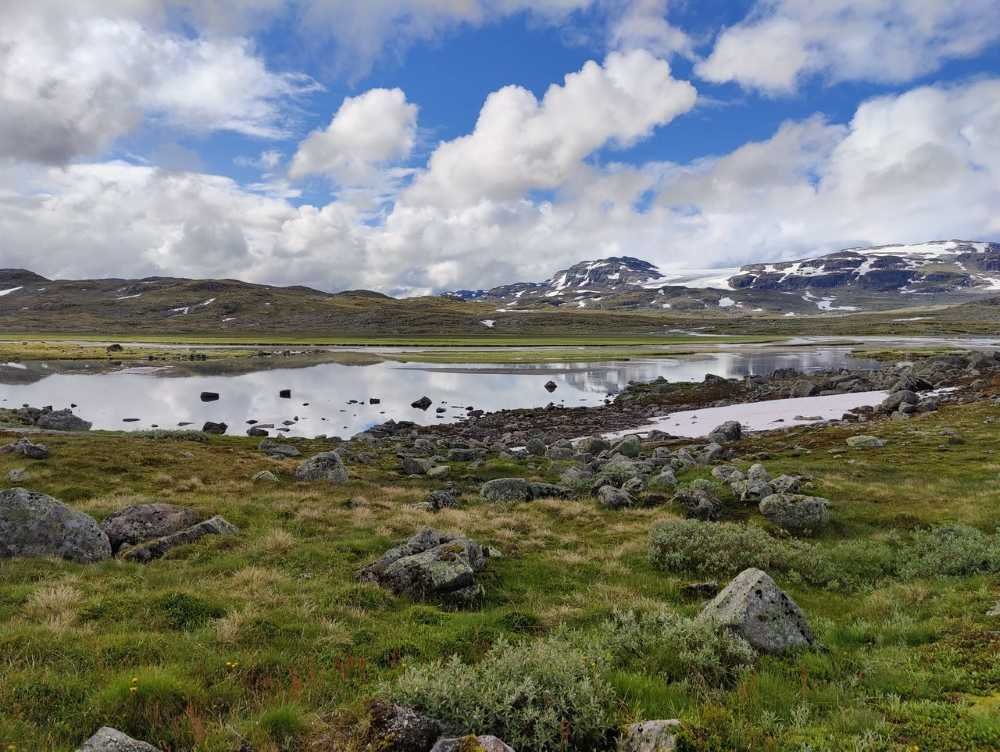
Annual snowfall: 525 cm (207 inches) | Snow days: 170
Roald Amundsen came to Finse to train.
In 1909 and 1910, while planning his South Pole expedition, Amundsen brought his team to the Hardangervidda plateau to test equipment and build endurance in conditions harsh enough to break both. He chose Finse specifically because the altitude and the exposure created the kind of punishment that would reveal whether his gear would survive Antarctica. Most of it did. He reached the South Pole in December 1911.
Finse sits at 1,222 metres on the Bergen Railway, the line connecting Bergen on the western coast to Oslo. There is no road to Finse. No cars. The only access is by train or, in summer, by foot or bicycle on the historic Rallarvegen route. A small community of a few hundred people lives here year-round at the Finse 1222 hotel and research facilities.
The snowfall numbers are extreme. 525 centimetres per year. 170 snow days annually, which means more than half the days of the year have active snowfall. Snow cover typically runs from September through June, and in cold years it never fully disappears. The Hardangervidda plateau is the largest mountain plateau in northern Europe, sitting well above the tree line, and Finse sits exposed at its highest accessible point. There is nothing to interrupt the weather coming in from the Norwegian Sea or from the north.
Worth visiting: The Finse 1222 hotel is one of Norway’s most remote mountain lodges, surrounded by glacier terrain. The Hardangervidda National Park is the largest national park in Norway and covers most of the plateau. In summer the Rallarvegen cycle route from Finse down to the fjord below is one of the most spectacular descents in Scandinavia.
Snow season: September through June
Peak months: January through March
School closure risk: Very High
2. Hemsedal, Viken
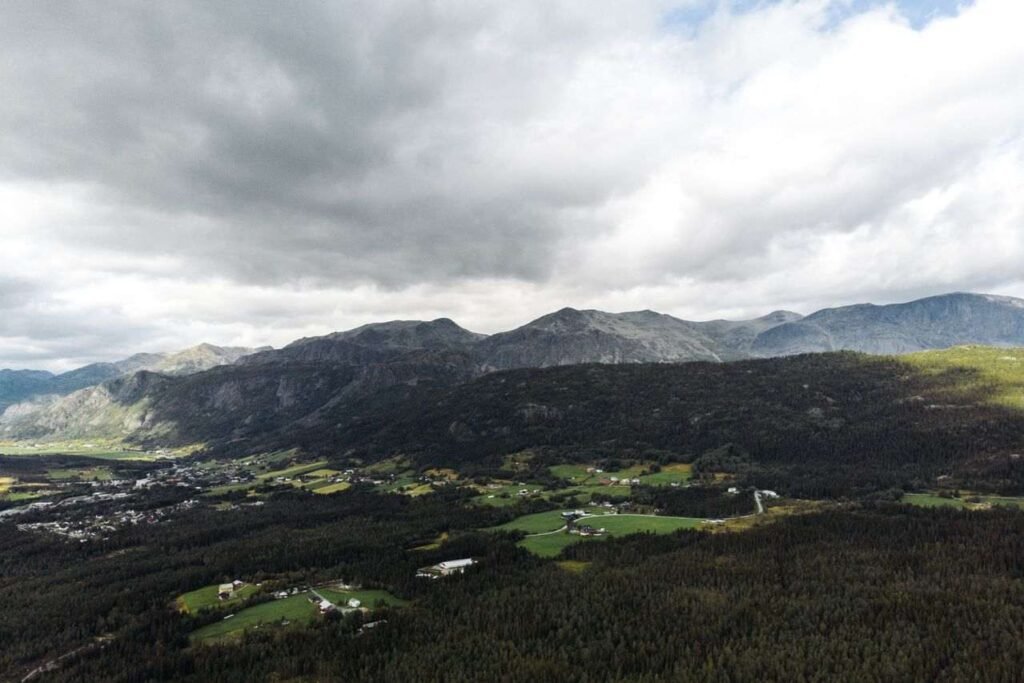
Annual snowfall: 428 cm (169 inches) | Snow days: 135
Hemsedal markets itself as the Scandinavian Alps.
That is not exaggeration. The valley sits at roughly 640 metres in Hallingdal in what was formerly Viken county, and the terrain surrounding it creates some of the most consistently snow-loaded conditions in all of Scandinavia. 428 centimetres per year. 135 snow days. A season that runs reliably from November through May.
The geography at work here is straightforward but effective. Atlantic moisture systems move eastward from the Norwegian Sea and hit the mountain ridges separating western and eastern Norway. Hemsedal occupies a valley that channels that moisture efficiently, and the surrounding peaks force it upward at exactly the point where temperatures stay below freezing through most of winter. The result is snowfall that arrives frequently and in quantity.
What makes Hemsedal interesting beyond the ski statistics is the scale of the terrain. The ski center rises to about 1,450 metres, giving a vertical of roughly 800 metres from base to summit. On days when visibility is clear, the views from the top ridgelines extend across multiple valleys.
Worth visiting: Hemsedal Skisenter is consistently rated among the top three ski destinations in Norway and hosts World Cup alpine racing events. The Hydnefossen waterfall in the valley, best seen in late spring when meltwater peaks, is one of the most impressive in the region. Summer hiking on the Skogshorn ridge above the resort gives a full panorama of the Hallingdal valley system.
Snow season: November through May
Peak months: January through March
School closure risk: Very High
3. Geilo, Numedal
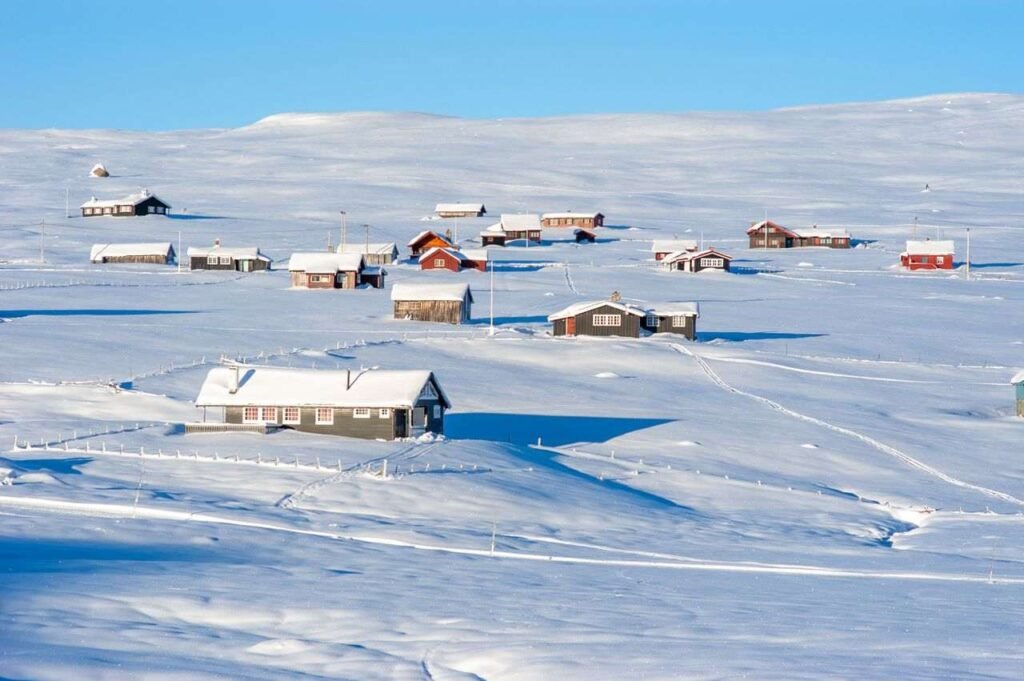
Annual snowfall: 374 cm (147 inches) | Snow days: 130
Geilo sits at 800 metres on the Bergen Railway between Bergen and Oslo, near the high point of the line just east of Finse. Unlike Finse, Geilo is an actual functioning town with around 2,500 permanent residents, hotels, a full-service ski resort, and a year-round tourism economy.
The 800-metre elevation on the Hardangervidda approach means Geilo sits well above the temperature inversion layer that keeps lower-lying Norwegian valleys milder. When Atlantic storms cross the plateau, Geilo is in the direct path. 374 centimetres per year and 130 snow days. Snow arrives in late October or early November most years and stays through April and sometimes May.
Geilo has a specific cultural character that separates it from the bigger resort atmosphere of Hemsedal. The Dr. Holms Hotel has been operating since 1909 and represents a particular Norwegian tradition of upland health resorts, which is where wealthy Norwegians went at the turn of the last century to recover from tuberculosis and the pressures of urban life. The mountain air was considered medicinal. The hotel still operates and still carries that sense of another era.
Worth visiting: Dr. Holms Hotel is one of the most historically significant mountain hotels in Norway. Geilo Skisenter covers terrain on both sides of the valley with multiple gondola and lift connections. The Numedal valley below Geilo has several stave church sites dating from the medieval period, the closest being in Nore.
Snow season: November through May
Peak months: January and February
School closure risk: Very High
4. Røros, Trøndelag
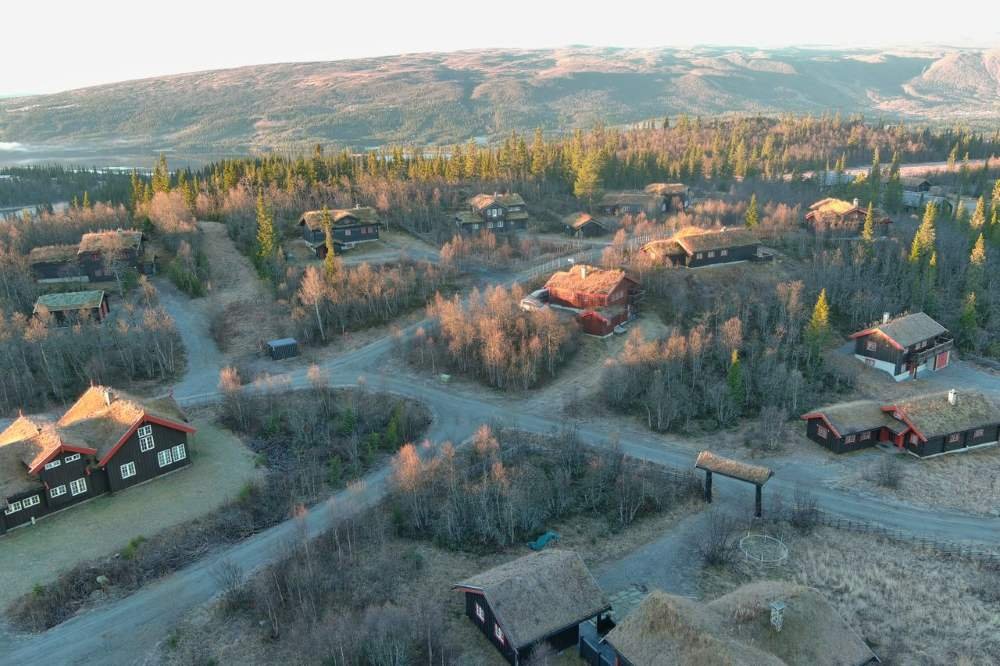
Annual snowfall: 263 cm (104 inches) | Snow days: 145
Røros is one of the coldest towns in Norway.
The lowest temperature ever recorded in Røros was minus 50.4 degrees Celsius. That is not a modern record from a scientific monitoring station. That was the temperature on a winter morning in 1914 as reported by the local observer. The town sits at 628 metres in a continental climate zone in Trøndelag, shielded from Atlantic moisture by the mountains to the west. What it gets instead is dry Arctic air from the north and east, and cold that is genuinely severe.
145 snow days per year. That is the most snow days of any town on this list, more than Finse despite Finse having more than twice the annual total in centimetres. What this tells you is that Røros gets frequent light snowfall across a very long winter rather than the heavy intense storms that load up the mountain towns further west. The snow season runs from October to May, sometimes stretching into early June.
Røros is also a UNESCO World Heritage Site. The town was founded as a copper mining settlement in 1644 and the mining operation ran continuously for 333 years until it closed in 1977. The wooden town buildings, many dating from the 18th century, are preserved in near-original condition. Walking the main street in winter, with snow on the rooftops and the old smelter tower visible at the end of the street, is one of the more distinctive experiences in Norway.
Worth visiting: The Røros Museum runs tours of the Olavsgruva copper mine, which descends into the mountain and maintains the original mining equipment. The medieval wooden church, Røros Kirke, dates from 1784 and still hosts winter concerts. The Røros Reindeer experience offers sled rides and reindeer herding demonstrations in winter.
Snow season: October through May
Peak months: January through March
School closure risk: Very High
5. Stryn, Vestland
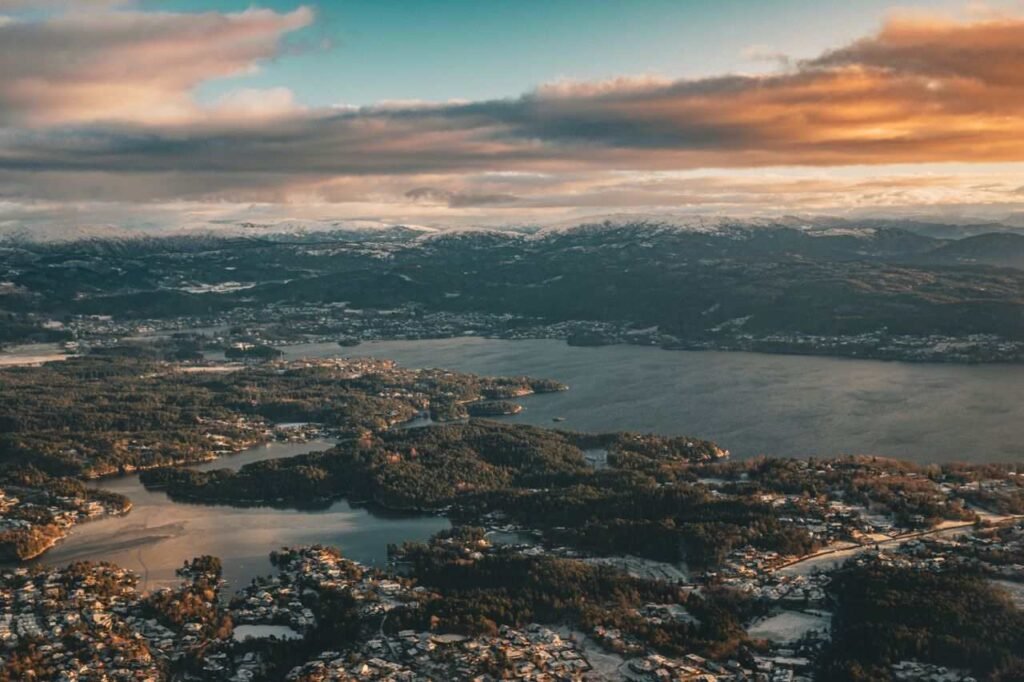
Annual snowfall: 245 cm (96 inches) | Snow days: 108
Stryn is in the Nordfjord region of Vestland, and it sits at the base of one of the most dramatic vertical transitions in Norway. The town itself occupies a valley floor near the fjord at barely 12 metres above sea level. But the Strynefjellet plateau directly above rises to over 1,400 metres, and the glaciers that feed down from it carry enough snow to supply one of the few places in Norway where summer skiing is commercially viable.
The Stryn Summer Ski Center operates on glacier snow through June and sometimes into July. This is not manufactured snow. It is the residual pack from a winter that drops 245 centimetres at town level and considerably more on the plateau above. The orographic lifting effect along the western Norwegian coast is at its most extreme in this part of Vestland, where Atlantic moisture hits the Strynefjellet without any prior terrain to reduce it.
The wider Nordfjord area contains the Briksdal glacier, an arm of the massive Jostedalsbreen ice field. Jostedalsbreen is the largest glacier in continental Europe. Stryn sits at its western approach.
Worth visiting: Briksdal Glacier (Briksdalsbreen) is the most visited glacier arm of Jostedalsbreen and accessible via a short walk or a troll car ride from the visitor center. Stryn Summer Ski Center operates summer glacier skiing in conditions not found anywhere else in mainland Norway. The Loen Skylift cable car nearby rises 1,000 metres in five minutes from fjord level to the Hoven plateau.
Snow season: November through April
Peak months: January and February
School closure risk: High
6. Oppdal, Trøndelag
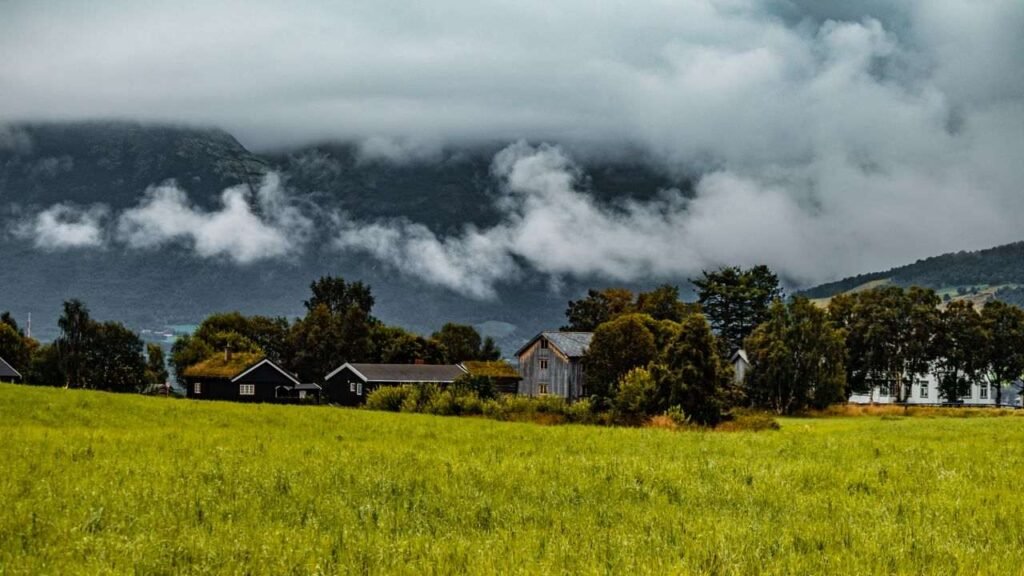
Annual snowfall: 238 cm (94 inches) | Snow days: 118
Oppdal sits at 516 metres in Trøndelag, where three mountain valleys converge. This is the gateway to Dovrefjell, the mountain plateau that divides Norway roughly into northern and southern halves. For most of Norwegian history, crossing Dovrefjell was the defining challenge of travel between north and south.
The snowfall here is 238 centimetres annually with 118 snow days. The inland position means Oppdal misses some of the heaviest Atlantic moisture that loads up the western slope towns, but the altitude and the opening of three valleys toward the plateau means the town collects consistent snow from multiple wind directions. January through February are the peak months and the ski center above the town operates what is considered one of the best lift systems in central Norway.
Dovrefjell above Oppdal is also one of the few places in Europe where musk ox live. Wild musk oxen have inhabited the Dovrefjell plateau since 1932, when they were reintroduced from Greenland after the original population was wiped out in the 19th century. There are around 300 animals on the plateau. Guided musk ox safaris run from Oppdal into the national park from late spring through autumn.
Worth visiting: Oppdal Skisenter is the largest ski resort in Trøndelag with 68 km of prepared runs. Dovrefjell National Park offers year-round hiking and the musk ox safaris are one of the most unusual wildlife experiences available in Norway. The E6 national road over Dovrefjell, one of the most scenically dramatic highway routes in the country, runs directly above Oppdal.
Snow season: November through May
Peak months: January and February
School closure risk: High
7. Narvik, Nordland
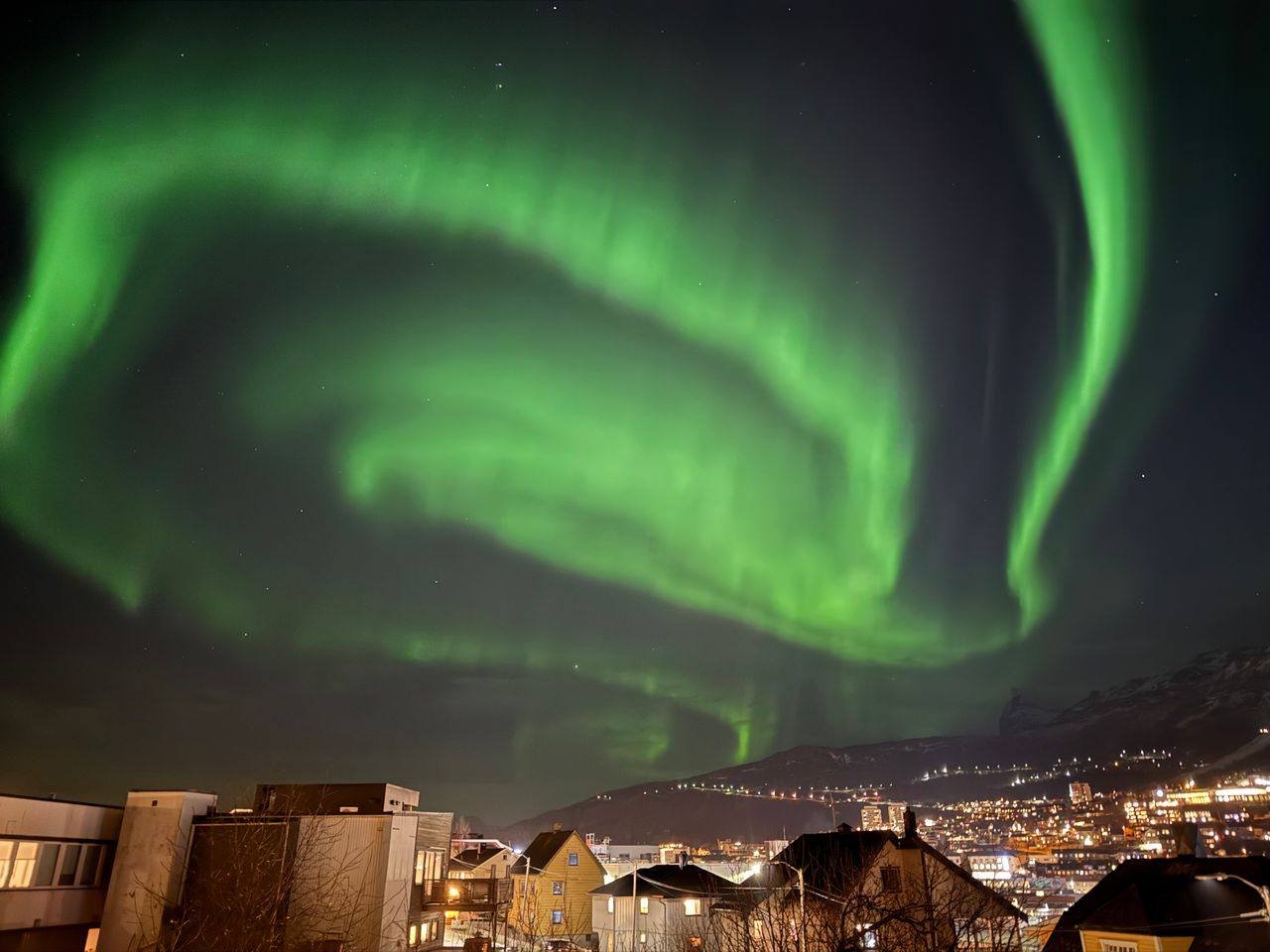
Annual snowfall: 211 cm (83 inches) | Snow days: 92
Narvik is a northern Norwegian port city at roughly 68 degrees north latitude in Nordland county. It is an ice-free port in winter, which sounds like a contradiction for a city at that latitude, but the Gulf Stream keeps the Ofotfjord open year-round. The surrounding mountains do not share that warmth.
211 centimetres of annual snowfall and 92 snow days. The city sits between the fjord at sea level and mountains rising to 1,700 metres directly above it, and that vertical gap is where the snowfall dynamic plays out. Atlantic air coming into the Ofotfjord picks up moisture and drops most of it against the mountains as it rises. The city below catches its share.
Narvik is also the site of one of the most significant battles of the Second World War in Norway. In April and June 1940, German and Allied forces fought two naval and land battles around the city. The German invasion aimed at securing the iron ore railway running from Sweden through Narvik to the port. The battles were among the first defeats Germany experienced in the war before a broader strategic situation forced Allied withdrawal. The city was heavily bombed and largely rebuilt after the war.
Worth visiting: The Narvik War Museum is the most comprehensive documentation of the 1940 battles in Norway, with original equipment and personal accounts from both sides. Narvikfjellet ski area rises directly above the city with fjord views from the top that are considered among the most dramatic in Arctic Norway. The Ofoten Railway, one of the most scenic rail routes in Scandinavia, runs from Narvik to the Swedish border through mountain terrain that almost defeated the engineers who built it in the 1890s.
Snow season: November through April
Peak months: January and February
School closure risk: High
8. Tromsø, Troms
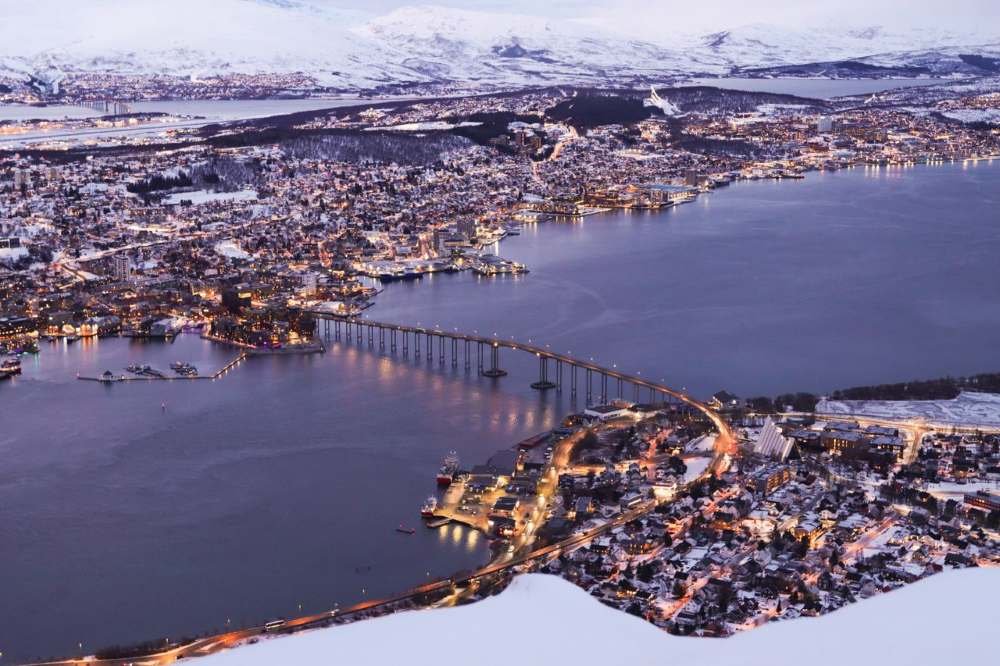
Annual snowfall: 192 cm (76 inches) | Snow days: 88
Tromsø sits at 69.6 degrees north latitude, which makes it the largest city in the world north of the Arctic Circle with around 75,000 inhabitants. It is 350 kilometres above the Arctic Circle. And it receives 192 centimetres of annual snowfall with 88 snow days, which puts it below several other Norwegian towns on this list despite being the most dramatically arctic of them all.
The explanation is the Gulf Stream. Tromsø is an island city on the Norwegian Sea coast, and the ocean influence moderates its temperatures considerably compared to what the latitude suggests. It is colder than London but warmer than Anchorage. The snowfall it receives comes from frequent lighter events rather than the intense mountain orographic loading that drives the higher totals in Hemsedal or Geilo. 88 snow days across a season that runs November to April. Consistent and substantial but not record-breaking.
What Tromsø offers that no other city on this list can match is the combination of northern lights and the polar night. From November to January, the sun does not rise above the horizon. The darkness draws aurora chasers from across the world, and the combination of reliable snowfall and reliable darkness in winter makes Tromsø one of the most visited Arctic tourism destinations on earth.
Worth visiting: The Arctic Cathedral (Ishavskatedralen) is the most photographed building in northern Norway, its white aluminum panels designed to reflect the midnight sun in summer and the northern lights in winter. The Tromsø Cable Car rises to 421 metres above the city with views of the islands and fjords in every direction. Husky sledding, reindeer herding experiences and northern lights boat tours all operate from Tromsø through winter.
Snow season: November through April
Peak months: January and February
School closure risk: High
9. Voss, Vestland
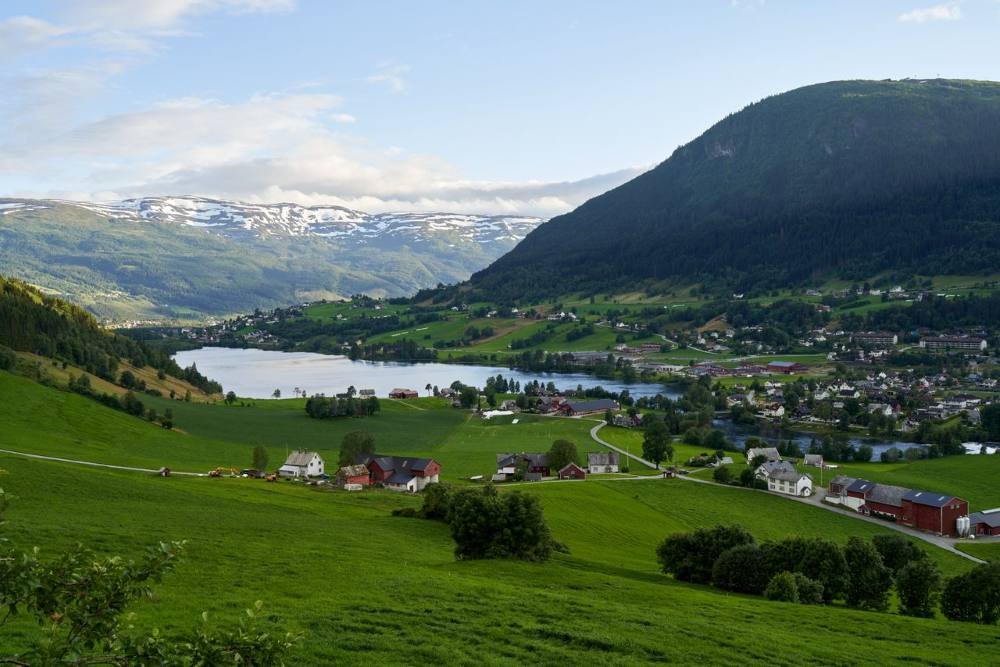
Annual snowfall: 183 cm (72 inches) | Snow days: 95
Voss sits at 56 metres in the Vestland county, in the valley between Bergen and the inner Sognefjord. It is the town where Knute Rockne was born in 1888 before his family emigrated to the United States, where he eventually became the most famous American football coach of the early 20th century at Notre Dame. The connection is a point of local pride and still marked in the town.
More to the point for this article: Voss receives 183 centimetres of annual snow across 95 snow days. Its position at the eastern end of the Bergen Railway before the climb to the Hardangervidda means it sits at the transition zone between the wet maritime climate of Bergen (which gets enormous rainfall but less snow) and the higher, colder mountain zone above. The surrounding ridges trap Atlantic moisture as it rises, and the town below catches what drops before the air continues eastward.
Voss is also the self-declared extreme sports capital of Norway. The annual Voss Extreme sports festival in June draws athletes from across Europe for kayaking, paragliding, base jumping, and mountaineering events. In winter the same terrain that draws extreme sports participants is covered in the 183 centimetres that the measurement station records annually.
Worth visiting: Voss Resort connects two separate ski areas, Bavallen and Hanguren, with a gondola that rises from the town center. The Bordalen valley above Voss is an exceptional hiking destination in summer with several lakes and glacier views. The Voss Heritage Museum covers the region’s history including the emigration period when thousands of Voss residents left for America in the 19th century.
Snow season: November through April
Peak months: January and February
School closure risk: High
10. Bodø, Nordland
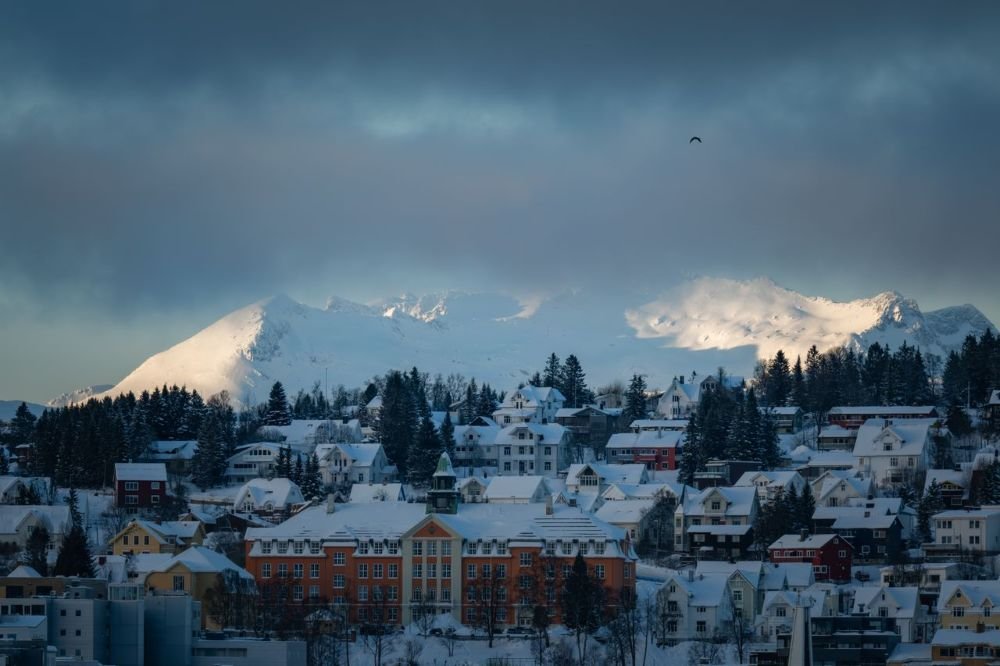
Annual snowfall: 163 cm (64 inches) | Snow days: 80
Bodø sits just above the Arctic Circle in Nordland county, at roughly 67.3 degrees north latitude. It is the administrative capital of Nordland and home to around 52,000 people. 163 centimetres of annual snowfall and 80 snow days makes it the mildest entry on this list, but mildest is relative when you are discussing an Arctic city.
The Gulf Stream reaches Bodø and keeps the coastal temperatures higher than interior Arctic locations at similar latitudes. What Bodø lacks in extreme cold it partly compensates for in coastal moisture: the Norwegian Sea delivers frequent precipitation, and when temperatures drop enough in winter, a significant share of it arrives as snow. 80 snow days and 163 centimetres is the result of this combination.
The Saltstraumen tidal current is 33 kilometres south of Bodø. It is the strongest tidal current in the world, with up to 37 billion cubic metres of water forced through a 150-metre-wide channel four times a day during peak tidal exchange. The standing waves and whirlpools it creates are up to 10 metres in diameter. You can watch it from a bridge above.
Worth visiting: The Saltstraumen tidal current observation area is 33 kilometres south of the city center by road and accessible by bus. Kjerringøy, a preserved 19th-century trading post 40 kilometres north of Bodø, is one of the best-maintained historical coastal settlements in Norway. The Norwegian Aviation Museum in Bodø is one of the largest aviation collections in Scandinavia and covers both military and civil aviation history.
Snow season: November through April
Peak months: January and February
School closure risk: High
Norway Compared to Other Snowy Countries
Norway’s mountain towns are in serious company internationally. The top 10 snowiest cities in Europe includes Tromsø at number three with 192 centimetres, but Finse at 525 centimetres would sit well clear of the top position if mountain stations were included alongside city-level data. Switzerland’s alpine towns are Norway’s closest competitors on the continent.
For a direct comparison, Switzerland’s snowiest towns are led by Arosa at 722 centimetres. Norway’s Finse at 525 centimetres would rank fifth on that Swiss list. The Swiss mountain basins and Norway’s mountain plateaus are operating at similar scales. The rest of Europe is not.
Among Germany’s snowiest cities, Oberstdorf in Bavaria leads at roughly 200 centimetres. That number would rank between Narvik and Tromsø on the Norwegian list, somewhere around seventh. The mountain interior of Norway receives snowfall at rates that exceed anything Germany or England produces.
Looking at Spain’s snowiest places, the Pyrenean town of Jaca tops the Spanish list at around 280 centimetres. That figure sits between Røros and Stryn on the Norwegian ranking, around positions four and five.
FAQ’s
Finse, a small community in Vestland at 1,222 metres on the Bergen Railway, leads Norway with approximately 525 centimetres (207 inches) of annual snowfall and 170 snow days per year. Snow cover typically lasts from September through June. The site was used by Roald Amundsen to test polar expedition equipment in the years before his 1911 South Pole crossing.
Oslo averages roughly 80 centimetres of annual snowfall and about 50 snow days per year based on Norwegian Meteorological Institute data. Its coastal position and relatively low elevation of 23 metres mean Atlantic moderation keeps it considerably milder than Norway’s inland and mountain towns.
Røros sits at 628 metres in a continental climate zone in Trøndelag, shielded from the heaviest Atlantic moisture by the mountains to the west. It receives frequent light snowfall events across a very long season from October through May, producing 145 snow days per year. The intensity per event is lower than the western slope towns, but the duration of winter is extreme.
Finse receives snow in every month of the year in most years. Reliable snow cover begins in September and continues through June. January through March are the peak months for snowfall intensity. The 1,222-metre altitude and fully exposed plateau position mean the site does not experience the seasonal thaw that lower-elevation Norwegian towns see in spring.

Snow Day Predictor was created and is maintained by Muhammad Nabeel Dar, an independent web developer and software professional focused on building reliable web applications and online tools.
With experience in software quality assurance and web development, Muhammad focuses on making Snow Day Predictor fast, easy to use, and helpful for checking snow day and school closure conditions across the United States and Canada.